Last week at the BIS Innovation Summit 2024, Israeli historian, philosopher, and bestselling author Yuval Noah Harari shared his views on bitcoin and electronic currency. During his presentation, Harari emphasized his disapproval of bitcoin, stating it is its money “built on distrust.”
Historian Yuval Noah Harari Expresses Skepticism About Bitcoin, Calls It 'A Currency of Distrust'

This article was published more than a year ago. Some information may no longer be current.
WRITTEN BY

SHARE
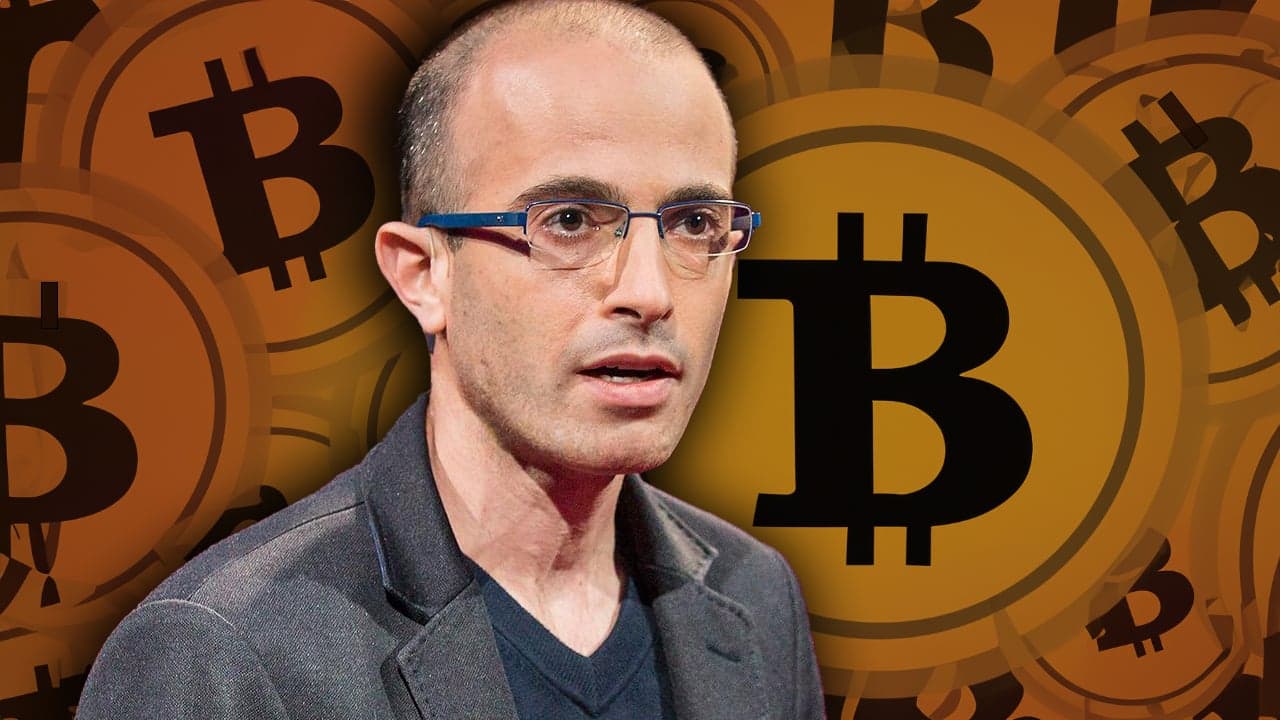
Yuval Harari Voices Concerns Over Bitcoin
Yuval Noah Harari has openly stated his dislike for bitcoin ( BTC), the cryptocurrency developed by the anonymous creator Satoshi Nakamoto. “When I look at bitcoin as a historian, I don’t like it … Because it’s a money built on distrust,” Harari explained. “The central idea of bitcoin is that it is basically electronic gold, so we don’t trust banks, the governments, so we don’t want to give them the ability to create as much money as they like, so we create this bitcoin.”
The historian added:
It’s a currency of distrust. I do think that the future belongs to electronic money but what we’ve seen over the last centuries, is that it is actually a good idea to give banks and governments the ability to create more and more money in order to build more trust within society.
Harari’s unease extends beyond bitcoin, as the noted historian has also voiced significant worries about the dangers artificial intelligence (AI) could pose to both humanity and global civilizations. He argues that AI represents a leap unlike any technology humans have previously developed, setting it apart even from milestones like the printing press.
Regarding the future of electronic currency, Harari admits his uncertainty about its evolution over the next two to three decades, yet he remains hopeful for a currency founded on “greater trust and not a currency of distrust.” These remarks drew criticism from cryptocurrency enthusiasts on platforms such as X.
Charles Hoskinson, co-founder of Cardano, responded on X by describing Harari’s perspective as “Dunning-Kruger on steroids,” a reference to the cognitive bias in which individuals with limited knowledge or competence might overestimate their abilities. Harari’s cautionary stance presents a stark contrast to the optimism held by many within the crypto sector. His critique foregrounds a fundamental debate about trust in financial systems—whether innovation should reinforce or circumvent traditional institutions.
What do you think about Harari’s opinion concerning bitcoin and saying it is a currency built on distrust? Share your thoughts and opinions about this subject in the comments section below.