


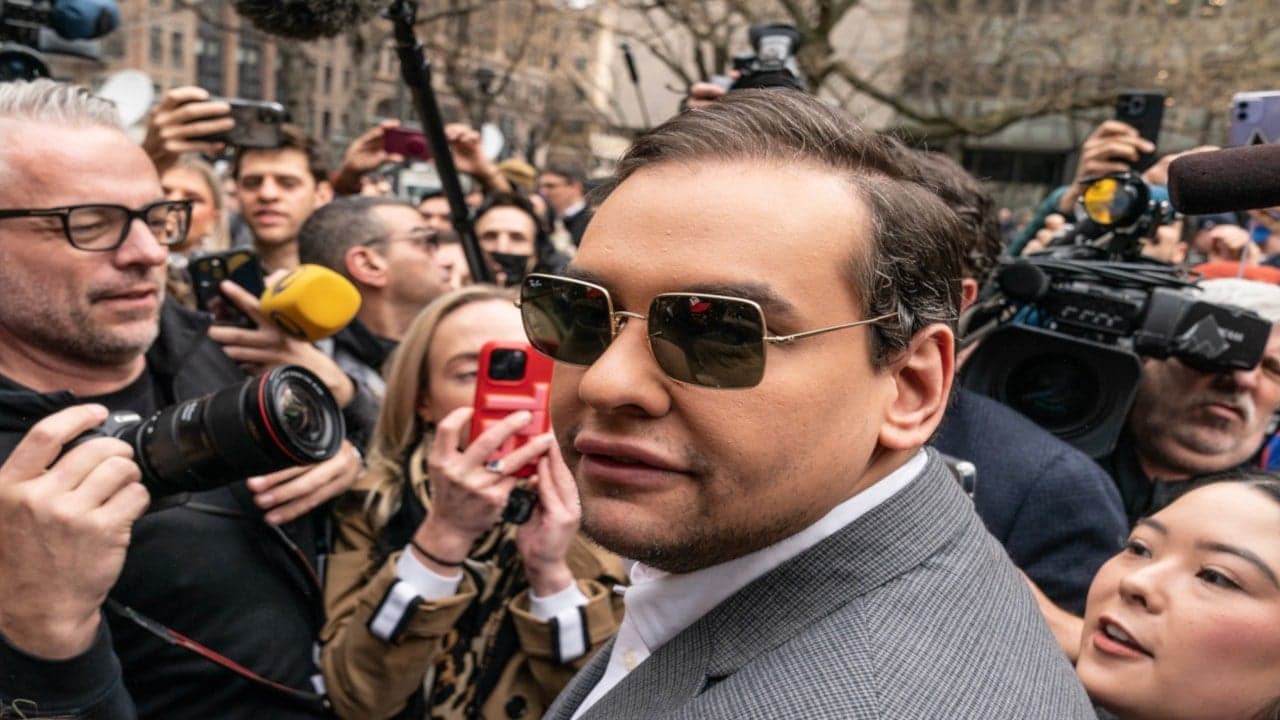
Former U.S. congressman George Santos publicly promised he would attend President Trump’s State of the Union address in February, then quietly bet on Kalshi that he would not, according to people familiar with his trades. The prediction market froze his account and referred the case to two federal regulators, both of whom have opened insider-trading investigations into a politician already convicted of fraud.
George Santos Hyped His State of the Union Seat, Then Bet He Wouldn't Show
WRITTEN BY
SHARE
Key Takeaways
- Kalshi put Santos’s State of the Union attendance near 75% before his no-show sent the odds tumbling.
- The DOJ and CFTC opened investigations after Santos allegedly profited in the tens of thousands.
- His case follows Polymarket probes over a $1.2M Google trade and a $400K bet on Maduro’s capture.
A Convicted Fraudster Lands at the Center of a Widening Insider-Trading Probe
The episode began four months after Santos walked out of federal prison on a sentence commuted by Trump, cutting short an 87-month term for wire fraud and aggravated identity theft tied to his 2022 campaign. Per NPR’s reporting, in a video posted to X the day before the speech, he told followers he would be watching from the gallery. On Kalshi, where traders had staked millions on who would attend, his confirmation pushed the odds of his appearance toward 75 percent.
He never showed. “Watching SOTU from an airport TV was not part of the plan,” Santos posted as Trump spoke, and the market cratered. What he omitted, per NPR, was that he had already bet against his own attendance, pocketing a profit in the tens of thousands at the expense of the bettors on the other side.
Kalshi detected the activity, froze the account, and referred it to the CFTC and the Justice Department, two people familiar with the matter said. Neither agency responded to requests for comment, and the prediction market also declined to discuss the case. Reached by reporters, Santos called the probe “news to me” and would not confirm an account: “I’m not saying yes, I’m not saying no.”
Santos joins a widening roster of traders accused of converting private knowledge into prediction-market profit. Last week, prosecutors charged a Google engineer who made more than $1.2 million on Polymarket trades tied to confidential search data. In April, a U.S. soldier was charged with making more than $400,000 betting on the capture of Venezuelan leader Nicolás Maduro. Lawmakers and the CFTC have repeatedly warned that the markets’ breakneck growth has outrun their safeguards.

The former NBA guard was hit with new federal sports bribery charges over an alleged six-digit kickback he received to…
Read Now: Ex-Miami Heat Guard Terry Rozier Hit With Federal Bribery Charges Over Alleged $100K Kickback

What sets the Santos case apart is the source of the edge: the bettor himself. Kalshi disclosed in February that it had opened more than 200 insider-trading investigations over the prior year, a dozen of which became active cases. The former congressman remains a fixture of the market he is accused of gaming; last month, traders wagered nearly $90,000 on which words he would utter in a single Newsmax interview.