This week, markets have been thrown into turmoil by Trump’s trade skirmishes and his refusal to dismiss the possibility of an impending U.S. recession. At the moment, participants on Polymarket are wagering a 39% probability that the U.S. will slip into an economic downturn before the year concludes, while the likelihood of a Federal Reserve interest rate reduction next week appears to be off the table for now.
Gas Prices Down, but Anxiety Up: Decoding the Mixed Signals of America’s Economic Health

This article was published more than a year ago. Some information may no longer be current.
WRITTEN BY

SHARE

Beyond the Headlines: Why Declining Gas Prices and Real-Time Data Paint a Brighter Picture
Economic uncertainty continues to linger, and a wager on Polymarket, boasting a trading volume of $332,442, suggests a 39% probability that the U.S. will experience a recession this year.
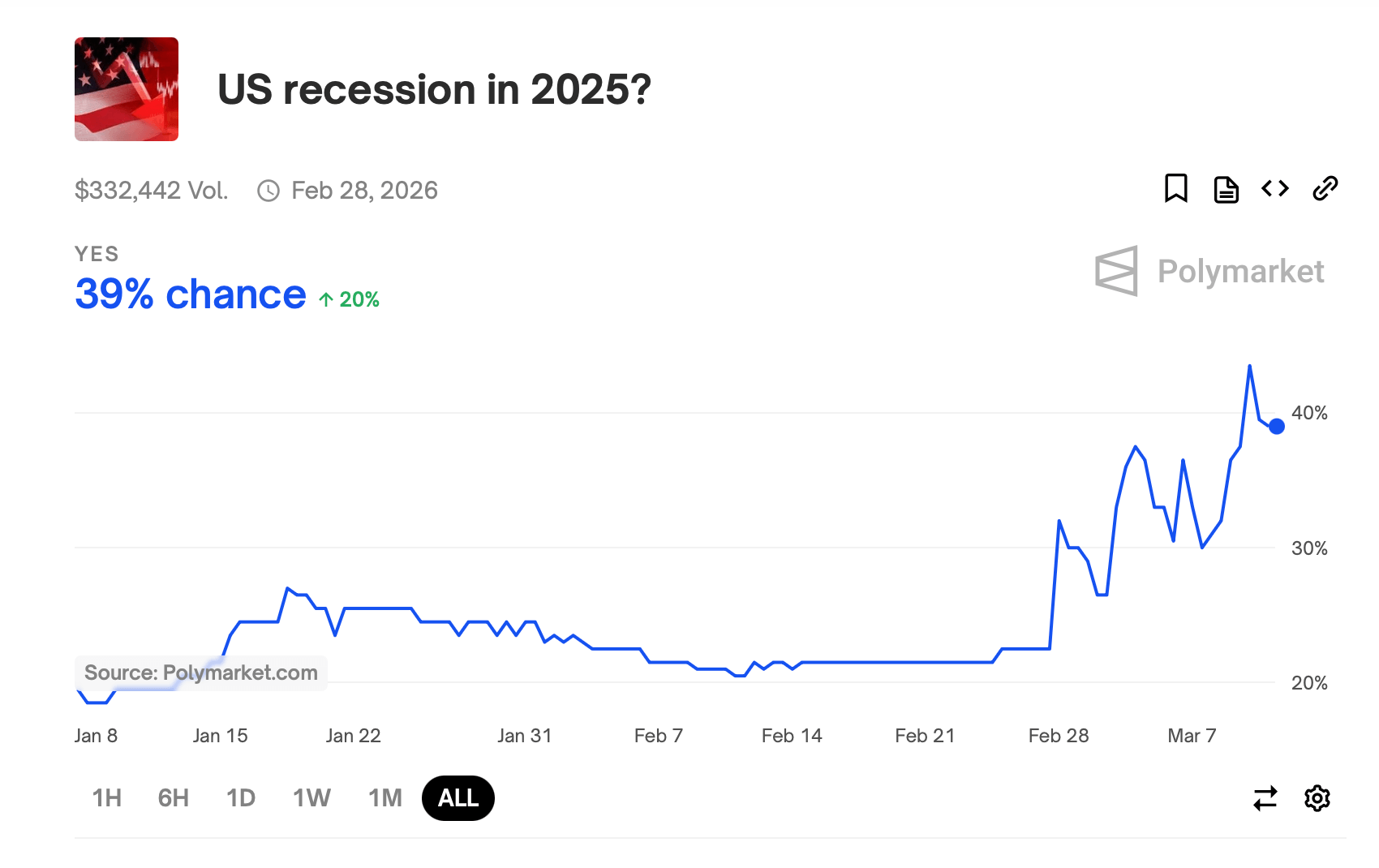
Fundamentally, the market bet concludes with a “yes” outcome if the National Bureau of Economic Research (NBER) officially announces a recession or if the seasonally adjusted annualized percentage shift in quarterly U.S. real GDP falls below 0.0 for two consecutive quarters.
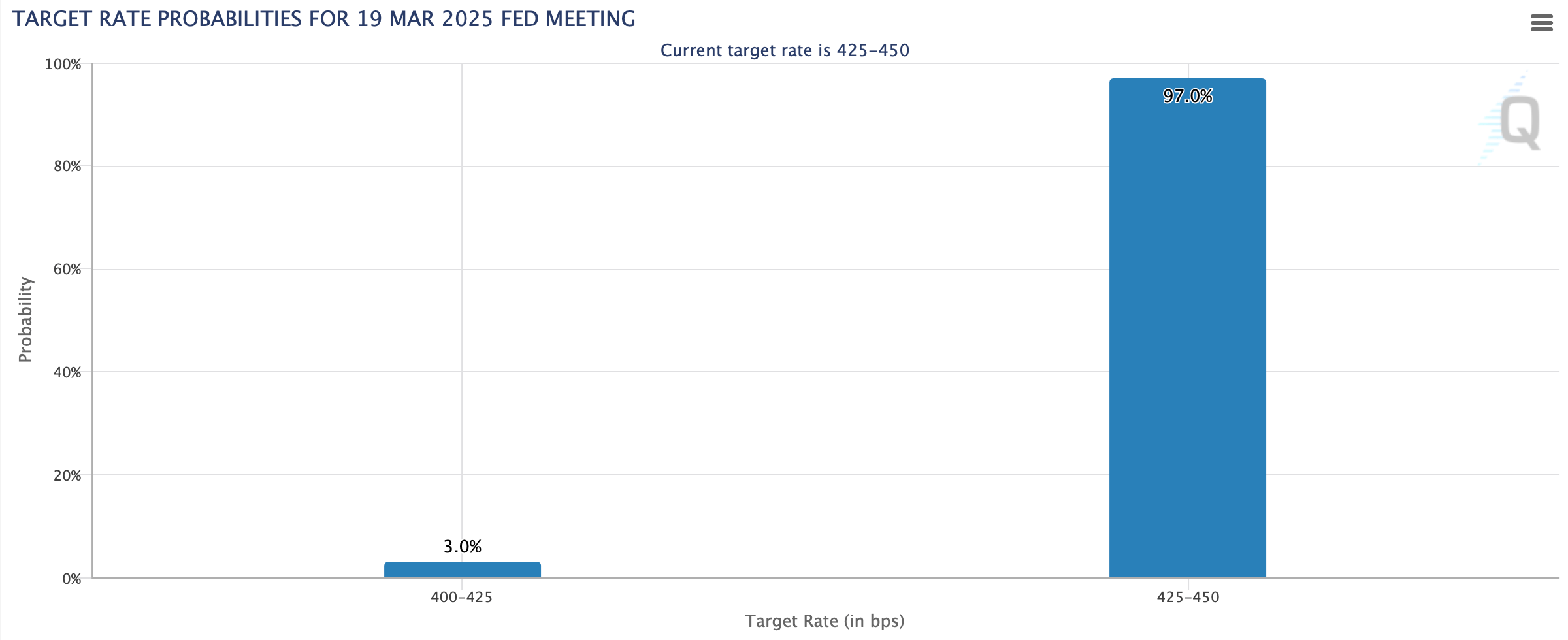
Meanwhile, the CME Fedwatch Tool reveals that the likelihood of a quarter-point rate cut at the Mar. 19 meeting remains at a modest 3%. A staggering 97% anticipate that the Federal Reserve will maintain the current rate during the forthcoming gathering. These probabilities are mirrored in a Polymarket wager, which has attracted a trading volume of $36.41 million.
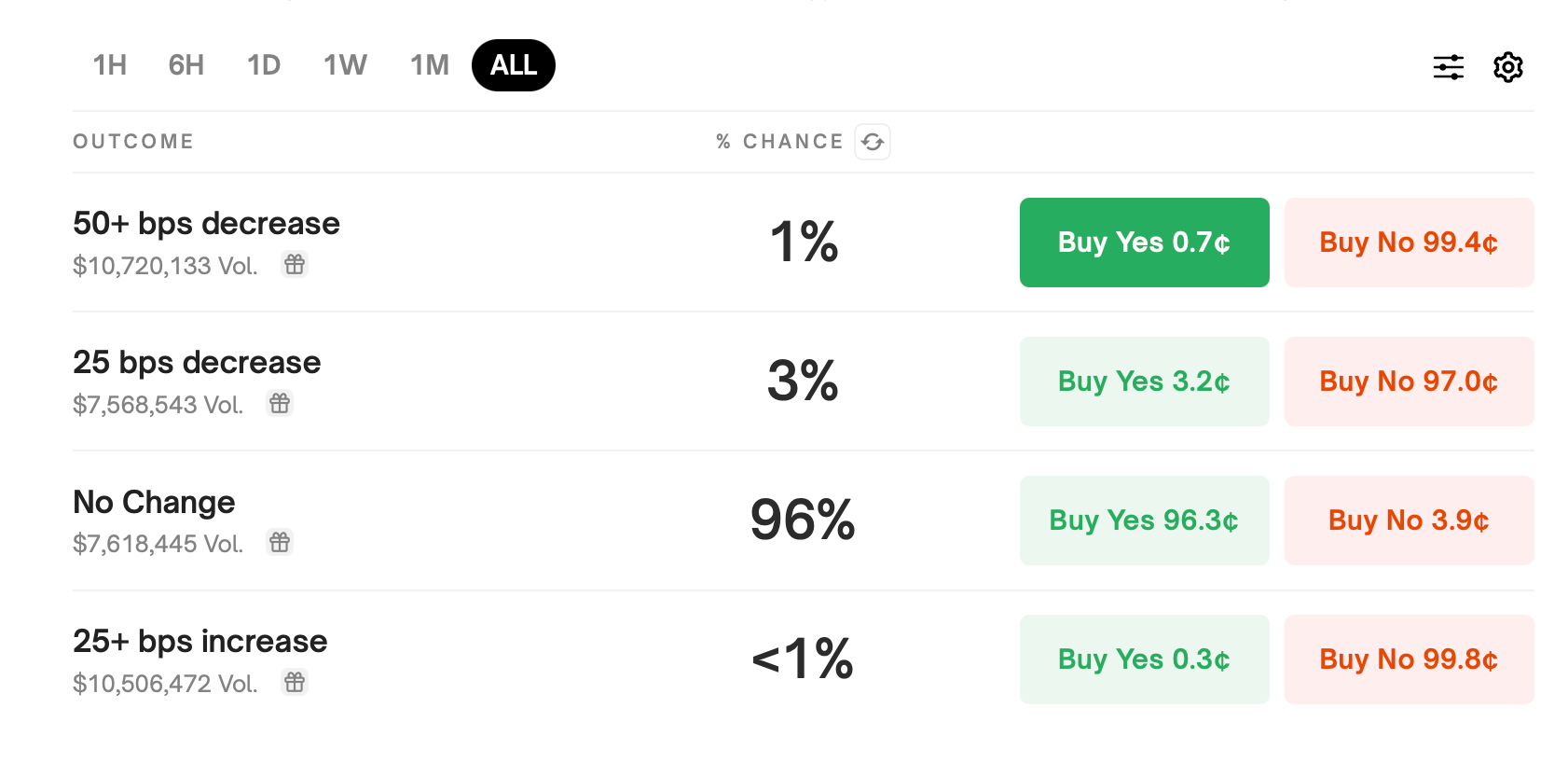
The odds suggest a 96% probability of no adjustment to the federal funds rate, a 3% chance of a quarter-point decrease, and a mere 1% likelihood of a half-point reduction. While Trump’s tariff warnings have sent shockwaves through Wall Street and the crypto markets, the government’s consumer price index (CPI) registered at 3% in Jan., with another update expected on Wednesday.
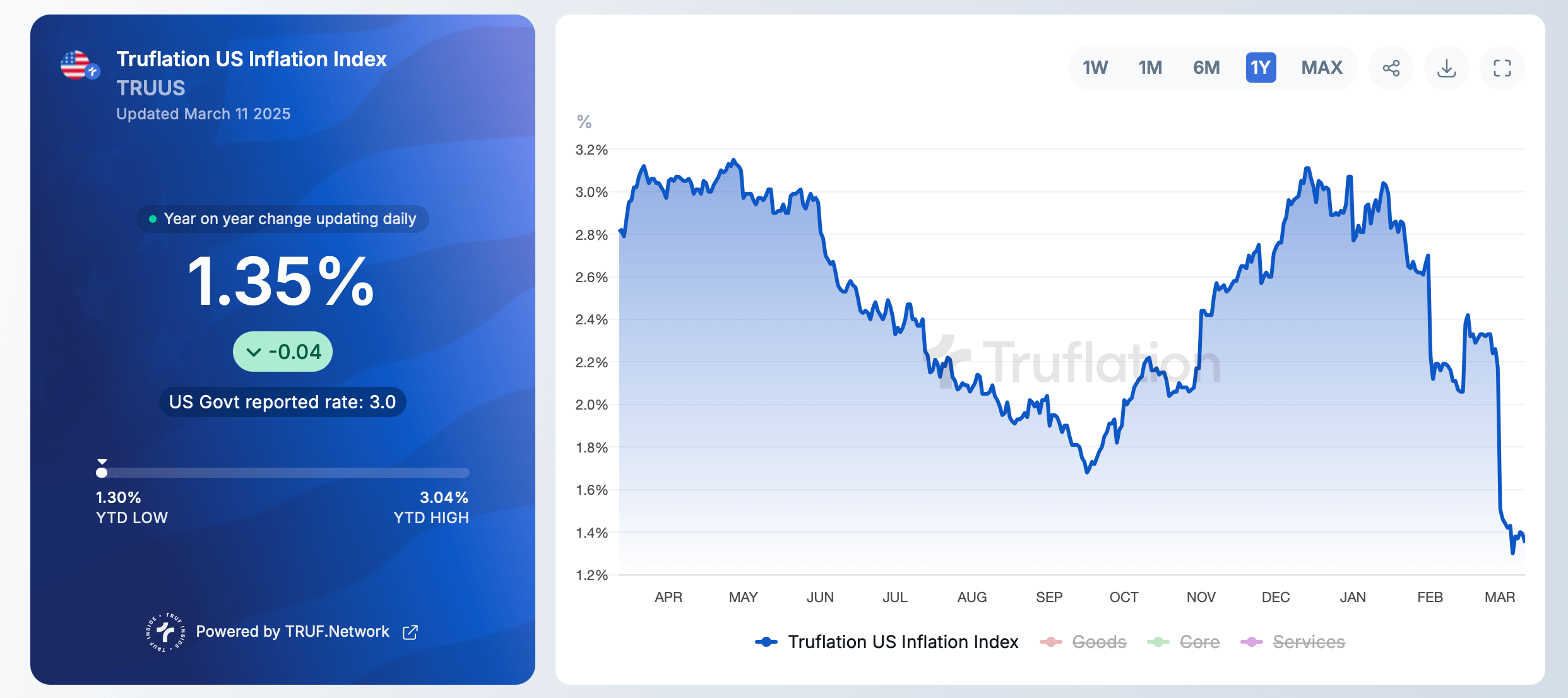
Simultaneously, data sourced from Truflation indicates that the U.S. inflation gauge is notably lower than official figures suggest. Currently, the Truflation index sits at 1.35%, having declined sharply since mid-January when it hovered near the 3% mark. Truflation is regarded as more precise than government metrics like the CPI because it harnesses real-time information from over 18 million items spanning a wide array of categories, refreshed daily through blockchain technology.

This approach guarantees openness, immediacy, and congruence with actual economic realities, sidestepping the CPI’s dependence on antiquated surveys. Coincidentally, reports emerged today highlighting that gasoline prices in the United States have fallen for the third straight week, hitting a four-year low.
The national average now rests at $3.03 per gallon, marking the lowest March figure since 2021. While Trump’s tariffs and market turbulence may suggest looming chaos, underlying indicators hint at a less dire reality. Inflation metrics like Truflation and declining gas prices offer a counter-narrative to official figures, suggesting economic resilience. Amidst volatility, these nuances reveal that perceptions of crisis might exceed actual conditions, inviting a measured perspective on the nation’s economic trajectory.