


Strategy has realized more than $102 million in losses from its 2026 bitcoin sales, as Michael Saylor’s company keeps selling coins below its average purchase price to fund dividend and buyback obligations.
Saylor's Strategy Racks up $102M in Bitcoin Losses, per Cryptoquant
WRITTEN BY

SHARE
Key Takeaways
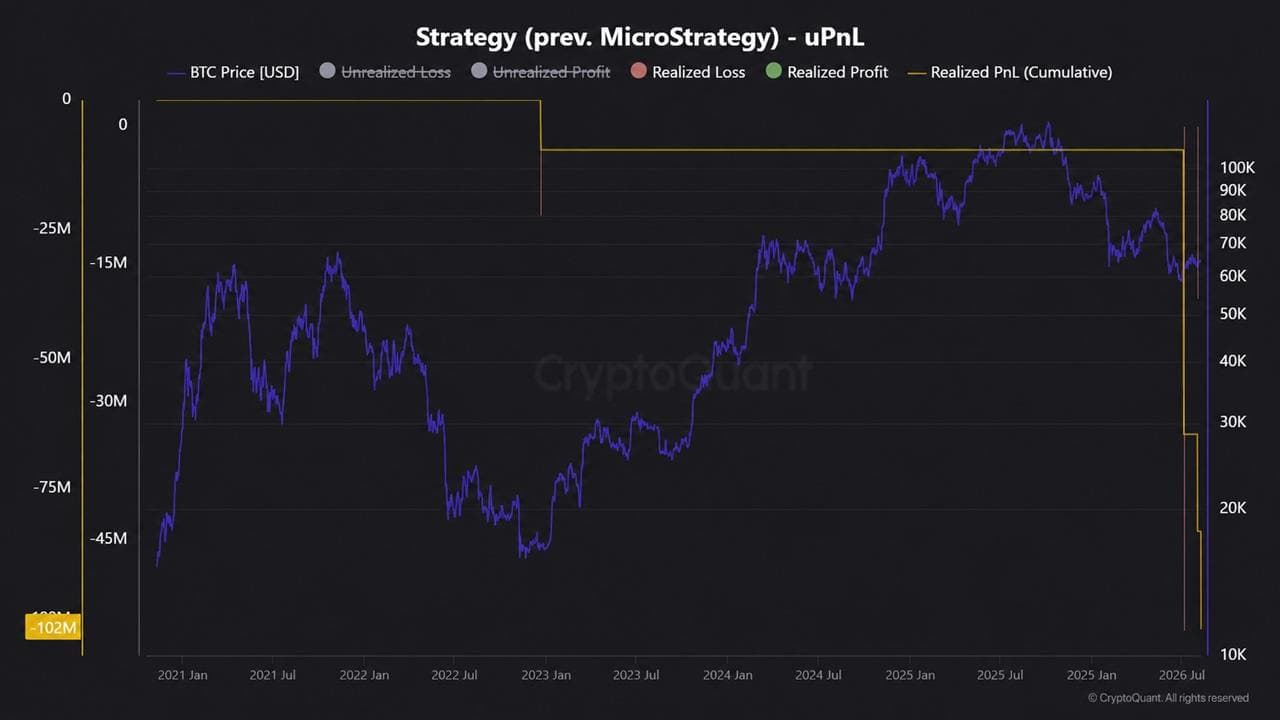
- Cryptoquant analysts estimate Strategy’s cumulative realized losses from 2026 bitcoin sales have topped $102 million.
- The company still holds roughly 840,000 BTC, with unrealized losses near $10.6 billion.
- Strategy’s preferred-stock dividend obligations have nearly quadrupled to $1.2 billion annually.
A Pattern of Selling Below Cost
Strategy has sold bitcoin at least four times over the last couple of years, breaking a roughly four-year streak of pure accumulation under Executive Chairman Michael Saylor’s “never sell a single satoshi” mantra. The first sale offloaded 3,588 BTC for $218.4 million to fund preferred-stock dividends. The most recent disclosed sale, covering the week ended August 9, saw the company sell 1,690 bitcoin for $108.6 million, an average of roughly $64,262 per coin, well below its overall cost basis near $75,400.
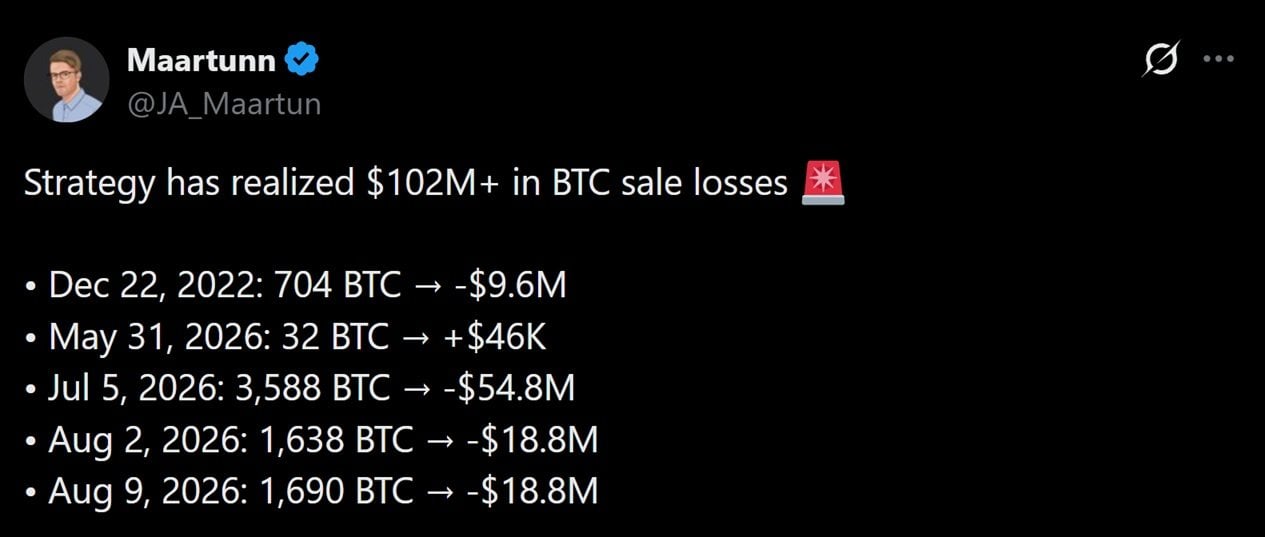
Each sale landed below what Strategy originally paid, and Cryptoquant’s tally puts the cumulative realized losses from this year’s monetization program at more than $102 million. The board has authorized up to $1.25 billion in total sales under the program, meaning the company has room to keep selling if it chooses to.
That said, the company has also continued buying in parallel, adding smaller amounts which analysts have read as an attempt to keep the accumulation narrative alive while quietly managing liquidity.
Why Strategy Is Selling at All
The sales are not a response to a cash emergency, according to Strategy’s own disclosures, but a deliberate capital-management choice. With the stock trading at a net asset value multiple below 1, issuing new shares to raise cash has become less attractive than monetizing a portion of the bitcoin treasury instead. Proceeds from the recent sale went toward funding dividends on STRC, the company’s variable-rate preferred stock, and toward repurchasing STRC shares directly.
The dividend math is a big part of the pressure. Cryptoquant estimates Strategy’s annual preferred-stock dividend obligations have nearly quadrupled to $1.2 billion as the company has issued more preferred equity to fund its bitcoin buying, cutting dividend coverage from more than seven years down to roughly 14 months at current cash levels. Restoring even a 24-month cushion would require an estimated $2.8 billion in reserves, nearly double what the company holds today.
The Bigger Unrealized Picture
Cryptoquant estimates the company is sitting on roughly $10.6 billion in unrealized losses across all bitcoin purchased between 2024 and 2026, since bitcoin’s price has spent much of the year below Strategy’s blended average cost basis of about $75,400 per coin. Bitcoin.com News reported in July that the company swung from a $14 billion profit to an $8.22 billion net loss in its second-quarter results, driven almost entirely by fair-value markdowns on its treasury rather than actual sales.
That accounting swing does not force Strategy’s hand the way a realized cash shortfall would, but it has drawn fresh scrutiny to a strategy built almost entirely around one asset’s price staying above cost.
What Investors Are Watching
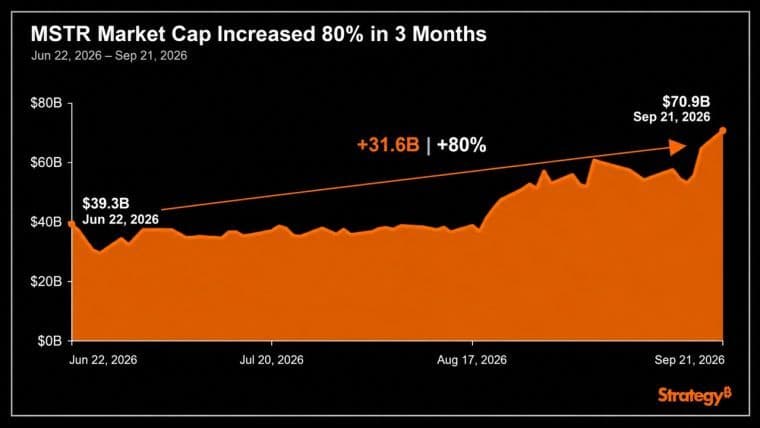
Strategy’s stock is down nearly 40% this year, trading in the low-to-mid $90s, far off its highs from when bitcoin traded above its cost basis. With three sales already on the books this year and $1.25 billion in board-authorized capacity still available, traders are broadly positioned for the monetization program to continue rather than pause.
Saylor has continued to posture the sales as balance-sheet management rather than a change in conviction, and the company added 520 BTC for roughly $35 million in a separate purchase even as it sold from other positions. Whether the firm can keep funding its dividend obligations without deeper cuts into its treasury will depend heavily on where bitcoin’s price sits when the next disclosure comes due.

Strategy sold 1,690 bitcoin for $108.6 million last week, using the proceeds to repurchase its STRC preferred stock as Michael…
Read Now: Strategy Sells 1,690 Bitcoin as Saylor Reloads Its Cash War Chest