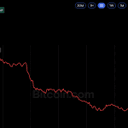



Total deposits in crypto lending vaults have expanded from $4 billion in early 2025 to over $10 billion, driven by institutional investors and treasuries seeking high yield on stablecoins. Industry experts advocate for stricter risk management and financial compensation buffers for security breaches or negligence.
Experts Warn of Systemic Risks as Crypto Lending Vaults Cross $10B
WRITTEN BY

SHARE

Key Takeaways
- DeFi lending deposits surged past $10 billion from $4 billion in early 2025, driven by institutional investors.
- Experts warn that collateral reuse and liquidity mismatches across platforms could trigger systemic contagion.
- Echo Base and Zigfinance executives advocate for stricter risk management and Basel III-style capital buffers.
Crypto Lending Vaults Surpass $10B
Deposits in decentralized finance (DeFi) crypto lending vaults have crossed $10 billion, marking a sharp increase from approximately $4 billion at the start of 2025, according to a recent Financial Times report. The surge is driven by investors seeking higher yields on stablecoins and other tokens rather than leaving capital idle.
While highlighting the innovation, efficiency, and growing institutional adoption of DeFi smart-contract vaults compared to the opaque centralized lenders of 2022, the report frames the expansion as a “regulatory blind spot.” It warns that investors chasing double-digit yields are frequently unaware of underlying systemic, smart-contract, and illiquidity risks.
Although the report stops short of calling for immediate government intervention, it places the sector directly in the crosshairs of global regulators. Industry experts argue the moment should serve as a wake-up call, urging platforms to address risk controls proactively before a major failure triggers a regulatory crackdown.
Systemic Vulnerabilities and Exposure
Some analysts, including the anonymous owner of the crypto casino platform 1win, contend the core challenge is not the volume of capital entering crypto lending, but whether platforms can withstand severe market stress.
Abdul Rafay Gadit, co-founder and chief commercial officer at Zigfinance, acknowledged that while platforms are taking steps to implement risk-management frameworks, adoption remains uneven.
“In parts of the market, growth is running ahead of safeguards, particularly around underwriting and liquidity,” Gadit told Bitcoin.com News. “Liquidations, oracles, and isolated markets are useful controls, but their effectiveness still depends on accurate pricing, sound collateral, and available buyers when markets are stressed.”
Gadit cautioned that current fee structures often exacerbate these risks by rewarding asset growth and high yields without enforcing accountability for potential losses. When asked how a major failure or liquidation cascade could impact the broader market, he cited collateral reuse as the primary vulnerability.
“A vault share can be borrowed against elsewhere, creating another layer of leverage on the same underlying assets,” Gadit explained. “If its value or liquidity collapses, liquidations can spread across connected markets. Different platforms can end up carrying the same economic exposure.”
He also highlighted liquidity mismatch as a secondary threat, noting that vaults offering rapid withdrawals against private loans or locked positions risk depleting liquid reserves during sudden exit waves—leaving remaining investors holding illiquid assets.
“An exchange distributing the product can then face a trust crisis even without taking the credit loss itself,” Gadit said. “The question is how much common exposure sits behind products that appear diversified.”
Setting Standards and the Regulatory Debate
As official scrutiny intensifies, industry analysts broadly agree that platforms must institute rigorous standards for collateral management, disclosure, and liquidity.
To mitigate cascading liquidations, experts recommend establishing published eligibility criteria, conservative haircuts, and strict limits on circular or related-party collateral. Beyond basic proof-of-reserves audits, analysts advocate for “proof of exposure”—demanding clear disclosure of where capital is deployed, the degree of leverage involved, and independent verification of off-chain counterparty risks.
Redemption terms must also align with underlying asset lockups, supported by curator capital at risk and insurance-style safeguards to protect users against exploits or negligence.
However, debate remains over whether self-regulation can adequately protect market participants as institutional adoption scales. Analysts suggest that smart contracts alone cannot eliminate market shocks, warning that proportional oversight and independent scrutiny of underwriting will become unavoidable—particularly as certain vault architectures risk falling under existing securities laws.
The Case for Risk-Based Capital
Highlighting the structural fragility of the current ecosystem, August Widmer, partner in investments at Echo Base, argued that the absence of mandatory capital buffers leaves the sector uniquely vulnerable.
“Regulation tends to lag innovation, and unfortunately that gap is often where the consumer is left exposed,” Widmer said. “While depository institutions are subject to Basel III capital requirements, most crypto companies have no such guardrails—they can extend endless amounts of risk with no mandatory capital buffer. The result is an industry of large conglomerates at high risk of total failure yet managing customer assets across numerous business verticals.”
Widmer noted that in an interconnected digital asset environment, an unhedged failure at a single protocol often causes widespread contagion, referencing the early 2026 Kelp DAO exploit that threatened major DeFi lending protocols.
“In the interdependent world of crypto, failure at one institution often leads to failure at another,” Widmer explained. “When one leg of the crypto stool breaks, the entire stool collapses.”
To prevent systemic failures, Widmer suggested adapting established financial frameworks to digital asset markets, even if doing so tempers rapid expansion.
“Implementing a framework similar to Basel III, yet tailored to the industry, would inevitably add cost and slow development, but would almost certainly create a safer, more stable environment,” Widmer said. “The crypto industry needs to ask itself if the tradeoff is worth it. Is operating like a high-growth Jenga tower worth the failures and customer losses?”

The cross-chain communication protocol Layerzero Labs disclosed on Friday that its internal infrastructure was compromised by North Korean hackers and…
Read Now: Layerzero Discloses RPC Poisoning Incident Linked to $292M KelpDAO Hack