


Blockchain fee revenue is a poor performance metric, according to Ripple’s David Schwartz. Responding to an XRP Ledger fee suggestion, he described transaction charges as friction the chain failed to remove and questioned whose interests the metric represents.
Ripple's Schwartz Slams Fee Metric as 100x XRP Fee Hike Is Floated
WRITTEN BY

SHARE
Key Takeaways
- Schwartz puts fee-paying users at the center of the blockchain debate.
- An X user suggested a 10-fold or 100-fold base-fee increase.
- Standard XRP Ledger transaction fees are destroyed, not paid to validators.
Schwartz Questions Whose Interests Higher Fees Serve
People paying to use a blockchain face costs that fee revenue metrics can overlook, according to David Schwartz, Ripple’s chief technology officer emeritus. In an exchange on X on Oct. 4, he criticized fee revenue as a metric and questioned whose interests it represents, responding to a suggestion that XRP Ledger validators raise transaction costs to burn more XRP.
Schwartz stated:
“I think fee revenue is a terrible metric since it measures how much friction the chain *didn’t* remove. If you represent the people who collect the fees, then fees are great. But what about the people who *pay* the fees? Who cares about their interests?”
His argument draws a distinction between income for fee recipients and the expense borne by people making transactions. On networks such as Bitcoin, cryptocurrency network fees compensate miners for including transactions. The response shifts attention from the amounts collected to the costs of using those systems.
XRP Fee Proposal Centers on Burns, Not Validator Income
The exchange began with an X user arguing that investors and analysts increasingly evaluate base-layer blockchains by fee revenue. These networks process transactions on their own ledgers. The user contended that XRPL’s fraction-of-a-cent charges make it look economically insignificant under that measure, even though inexpensive settlement is central to its purpose.
The user’s counterargument was that XRPL’s transaction fees are permanently destroyed rather than distributed to validators, the servers participating in consensus, or agreement on transactions. The user framed that supply reduction as a benefit for every XRP holder. In this view, higher charges would increase the amount burned per transaction rather than generate income for network operators.
A 10-fold or 100-fold increase in the base fee was suggested, with the claim that transactions could still cost well under one cent while burning more tokens. The dollar cost would depend on XRP’s price. XRP Ledger’s fee voting process allows trusted validators’ preferences to influence the base charge, with changes subject to consensus.
Such adjustments require collective agreement rather than a unilateral instruction from an executive or company. Schwartz previously described XRP Ledger’s design as limiting Ripple’s control. In February, he explained that the architecture deliberately restricted corporate authority. The fee proposal therefore concerns a decision by network participants rather than an increase Ripple could impose alone.
Larger XRP Burns Weighed Against Lower Transaction Costs
The X user asked whether larger burns justify higher costs or whether inexpensive payments and tokenization better support adoption. Tokenization means representing assets with blockchain-based tokens. Burning reduces supply without paying holders. Ripple describes XRP’s role in payments and liquidity, or the ability to trade without substantially moving prices, as practical uses of the asset.
Those applications also extend to assets other than XRP, including stablecoins, tokens designed to track currencies or other reference assets. Schwartz has described XRP Ledger’s expansion beyond payments. In June, he discussed enterprise uses and offerings such as tokenized stocks, funds, and loans. Low costs were central to the X user’s question about adoption.
The base charge also differs from expenses arising when a large trade moves market prices. In March, Schwartz discussed how XRP prices relate to payment efficiency, arguing that higher prices can make transfers cheaper, other things being equal. The documented minimum standard transaction fee is 10 drops, equivalent to 0.00001 XRP, with higher costs possible under load.
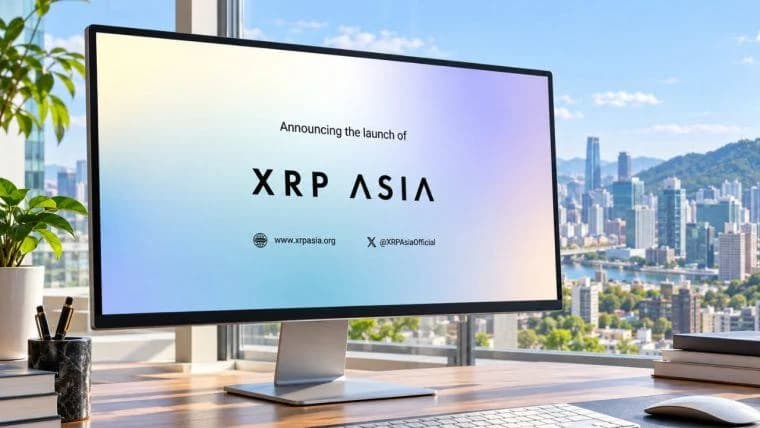
XRP Asia has launched with Ripple and the XRP Ledger Foundation backing to expand XRPL adoption across Asia-Pacific. The Singapore-based…
Read Now: XRP Asia Launches With Ripple Backing to Accelerate XRPL Adoption