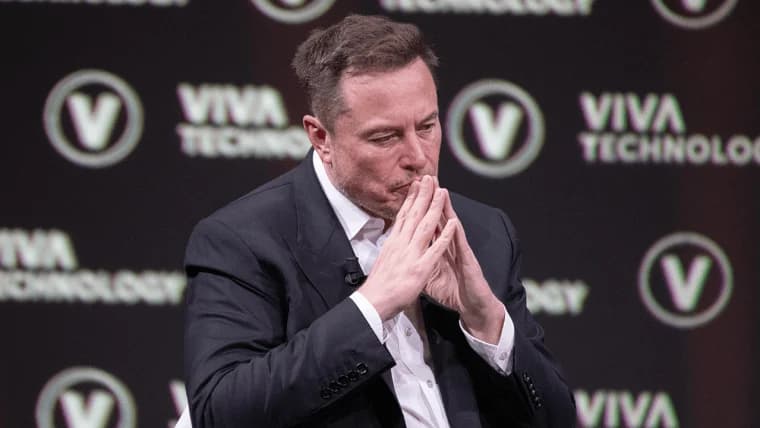



Elon Musk predicts artificial intelligence and humanoid robots could more than double global economic output within a decade. His forecast rests on rapid automation, mass robot production, and enough electricity to support the expansion.
Elon Musk Says AI and Robots Could Double the Global Economy
WRITTEN BY

SHARE

Key Takeaways
- Musk expects AI and robots to more than double the global economy.
- Tesla is preparing robot lines designed to build millions of units a year.
- Power, manufacturing, and adoption could determine the outcome.
Musk Sees Machines Transforming Global Economic Output
A surge in machine-driven production could transform employment, wages, prices, and investment across nearly every major industry. Tesla and SpaceX CEO Elon Musk predicted in a Sept. 9 post on X, writing:
“AI + robots will more than double the global economy in less than 10 years.”
The statement extended an estimate Musk presented during a G20 innovation meeting earlier in September. He projected that AI alone could increase the global economy by 20% to 30%, while robotics could lift output by many multiples once robots can build other robots.
Musk has repeatedly connected automation with an economy capable of producing far more goods and services than people currently consume. In July, he predicted that money could lose much of its relevance by 2036 if AI and robots make essential products abundant and drive production costs lower.
Tesla Prepares Optimus for Large-Scale Manufacturing
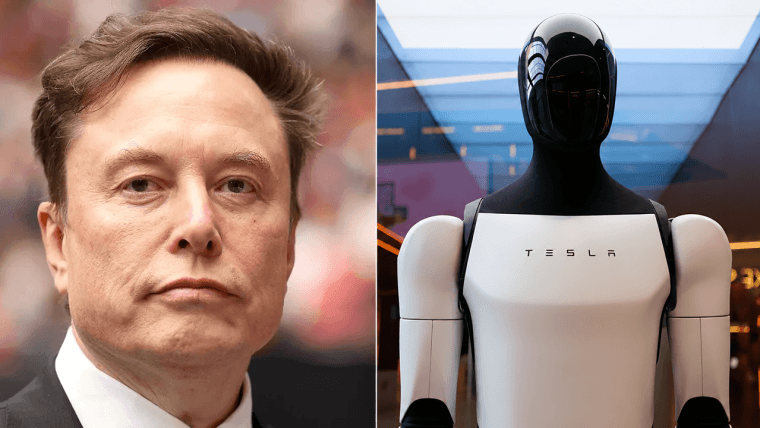
Turning that forecast into measurable output would require humanoid robots to move far beyond demonstrations and limited factory trials. Tesla’s first-quarter 2026 update shows that the company is preparing an Optimus production line in Fremont, California, designed to manufacture 1 million robots annually.
A second planned line at Tesla’s Texas factory is being designed for long-term annual production capacity of 10 million robots. Those targets remain far below Musk’s broader expectation of billions of machines, but they show how Tesla intends to shift humanoid robotics from experimental development toward industrial-scale production.
The latest prediction also builds on Musk’s January remarks at the World Economic Forum, where he described AI and robotics as tools for reducing labor scarcity. He envisioned robots handling factory work, household tasks, child supervision, and elder care as aging populations increase pressure on labor markets.
Power and Adoption Could Determine the Economic Impact
Economic output will depend on how quickly companies can deploy the technology, reorganize operations, and translate automation into lower costs or greater production. An International Monetary Fund (IMF) analysis published April 3 found that AI’s macroeconomic effects will be shaped by adoption rates and the ability of institutions and infrastructure to absorb the technology.
Electricity represents one of the most immediate constraints as AI developers compete for power, land, and data-center capacity. That competition has already reached cryptocurrency markets, where AI demand is drawing infrastructure away from bitcoin mining as operators pursue longer-term computing agreements.
Automation is also moving into digital finance through software that can execute tasks and control blockchain-based assets. These AI agents can interact with smart contracts and cryptocurrency wallets, extending machine activity beyond physical labor into payments, trading, and decentralized applications.
Musk’s forecast ultimately requires progress across AI software, processors, robotic dexterity, energy generation, and global manufacturing. Tesla’s second-quarter update, published July 22, said construction at its Fremont factory for Optimus began after the Model S and Model X lines were decommissioned, with production anticipated later this year.
Elon Musk said SpaceX could one day be worth more than the rest of Earth if the company achieves its…
Read Now: Elon Musk Says SpaceX Could Be Worth More Than Everything Else on Earth if Goals Are Met