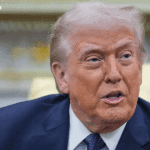
Democratic Senator Elizabeth Warren of Massachusetts is once again alarmed by the Federal Reserve’s trajectory, and warned on CNBC that U.S. markets would “crash” if President Donald Trump were allowed to remove Chair Jerome Powell.
Elizabeth Warren: ‘If Chairman Powell Can Be Fired, It Will Crash the Markets’
WRITTEN BY

SHARE
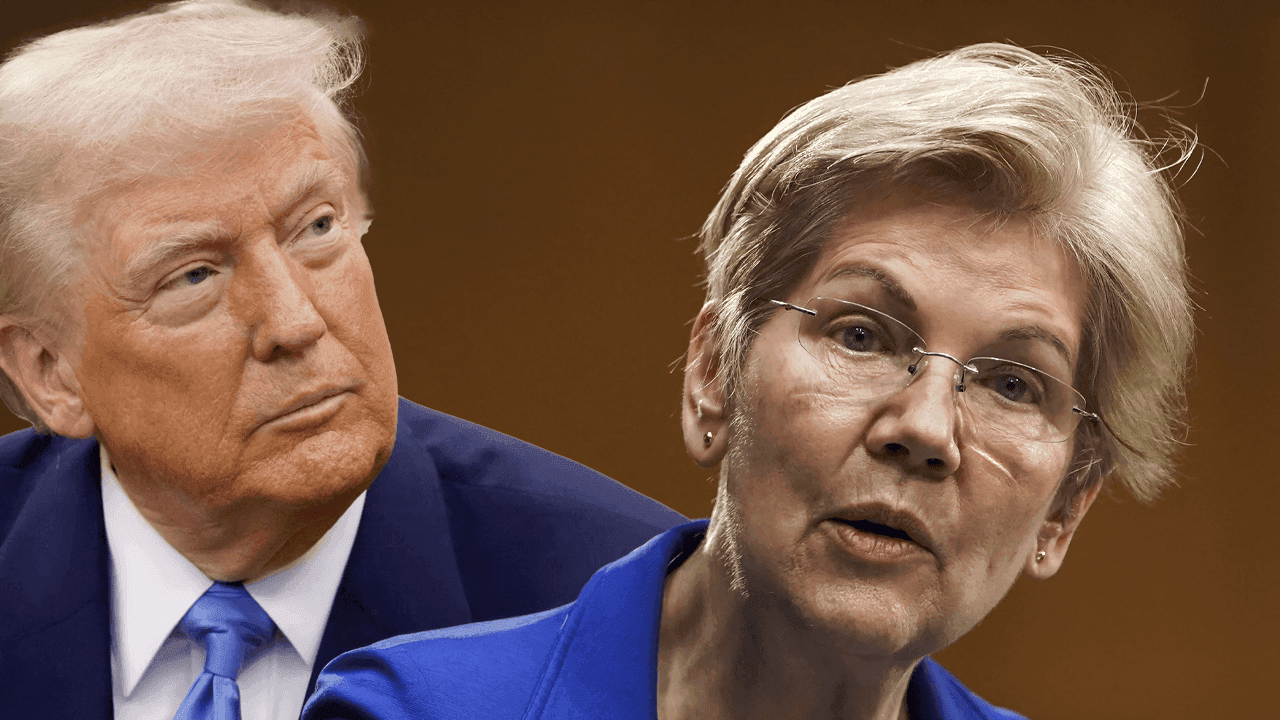
Warren Warns U.S. Could Become ‘Two‑bit Dictatorship’
In an interview with CNBC, Sen. Warren expressed serious concerns over President Trump’s influence on the U.S. Federal Reserve and his broader use of economic powers. Warren, a frequent critic of Powell, nonetheless defended the independence of the Federal Reserve, warning that any attempt by Trump to terminate Powell prematurely would send shockwaves through financial markets.
She said:
If Chairman Powell can be fired by the president of the United States, it will crash the markets in the United States.
Warren stressed that the bedrock of market stability lies in the separation between politics and economic decision-making. She argued that allowing the president to interfere with Fed leadership would make the U.S. indistinguishable from autocratic regimes where financial decisions hinge on the whims of political leaders.
“If interest rates in the United States are subject to a president who just wants to wave his magic wand … this doesn’t distinguish us, then, from any other two-bit dictatorship around the world,” Warren stressed.
Addressing Trump’s recent public statements criticizing Powell and hinting at his removal, Warren suggested the former president was “testing the waters” to see whether the public or media would push back. She warned that even the perception of politicizing the Fed could rattle markets and compromise economic stability.
While the Supreme Court is considering whether the president can remove heads of independent agencies, Warren noted that even the administration’s own legal arguments seem reluctant to include the Fed in that scope. Warren’s denunciation of political meddling at the Federal Reserve rings hollow in light of her own record.
Just nine months ago, she openly urged the central bank to implement an aggressive 75-basis-point rate cut, directly pressuring Chair Powell to shift policy in line with her economic and political priorities. Now, she warns that even the appearance of presidential influence over the Fed threatens its credibility and market stability.
Her inconsistency reveals a selective reverence for central bank independence—one that appears contingent on who is exerting pressure and for what purpose. The critique becomes sharper when viewed alongside Thomas Joseph Webster’s study, “The Myth of Fed Political Independence,” which asserts that the Federal Reserve has long operated as a political extension of Congress and the executive branch.
Warren’s past demands for rate cuts and her current claims of defending institutional neutrality reflect the very political dynamics Webster exposes. Her selective outrage does less to uphold the Fed’s independence than to confirm its erosion under both parties.