


Demand for crypto assets fell sharply in July, as the Central Bank of Brazil’s numbers indicate that crypto investments reached only $572 million. This represents an 80% month-on-month decline as exchanges adapt to new anti-money laundering rules announced by the central bank.
Brazil Crypto Purchases Plummet 80% in July to $572 Million
WRITTEN BY

SHARE
Key Takeaways
- Brazil’s July crypto purchases plunged 80% to $572M as exchanges adapted to stricter regulations.
- New central bank AML and governance rules slashed foreign exchange flows by almost 60% year-over-year.
- Despite the monthly slump, 2026 crypto volume hit $15.25B, more than doubling last year’s total.
Brazil’s Crypto Investments Recoil 80% as Regulatory Scrutiny Intensifies
The Brazilian crypto industry is facing one of its harshest periods, as the local crypto market endures a regulatory adaptation phase.
According to the latest economic data released by the Central Bank of Brazil, crypto assets purchased in July reached $572 million, a sharp decline compared to the stellar numbers the Brazilian market posted earlier this year.
For comparison, in June, the bank reported $2.6 billion in crypto purchases, meaning that this index, which is composed of reported transactions by foreign exchanges, dropped by almost 80% month-on-month (MoM).
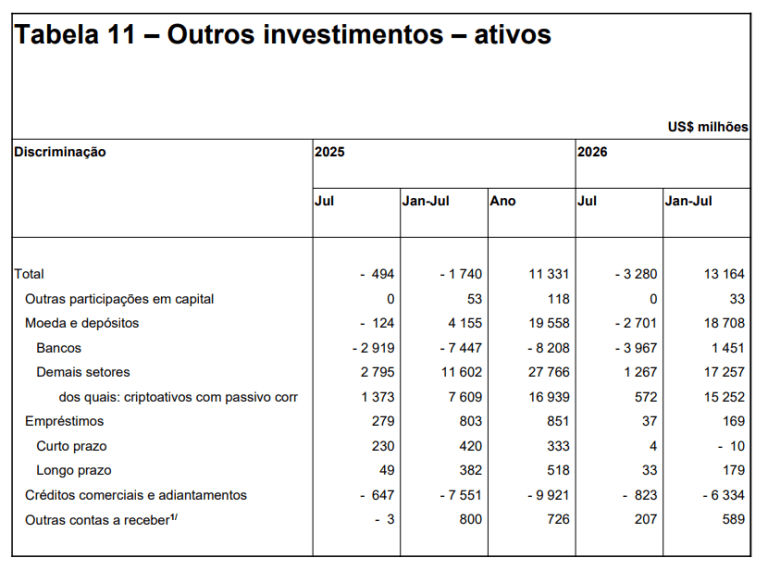
The central bank declared that most of these transactions involved stablecoins. For its purposes, the bank classifies digital tokens as crypto assets with corresponding liabilities.
Nonetheless, even compared with the same month last year, the drop is relevant: in July 2025, $1.4 billion was reported in these purchases, meaning the fall reached nearly 60%.
Fernando Rocha, head of the central bank’s statistics department, explained this movement as part of an adaptation period of the most relevant cryptocurrency exchanges to a new regulatory reality for digital assets in Brazil.
Talking to Valor Econômico, Rocha stressed that this decline “reflects a period of reorganization in this virtual asset market in the context of intensified regulation and supervision of the Central Bank’s conduct in this sector.”
Rocha explicitly pointed to new anti-money laundering controls and governance requirements as key elements behind this reduction.
“It’s an important factor behind the reduction in flows that we observed in the balance of payments, and we’ll have to see, in the remaining months, how this transaction item will perform,” he concluded.
Nonetheless, even with this drop and a growing oversight of the crypto sector, with stablecoins as the main target, 2026’s numbers are still overwhelmingly positive. Year to date, crypto investments have reached $15.25 billion, more than doubling the numbers for the same period in 2025 ($7.60 billion).
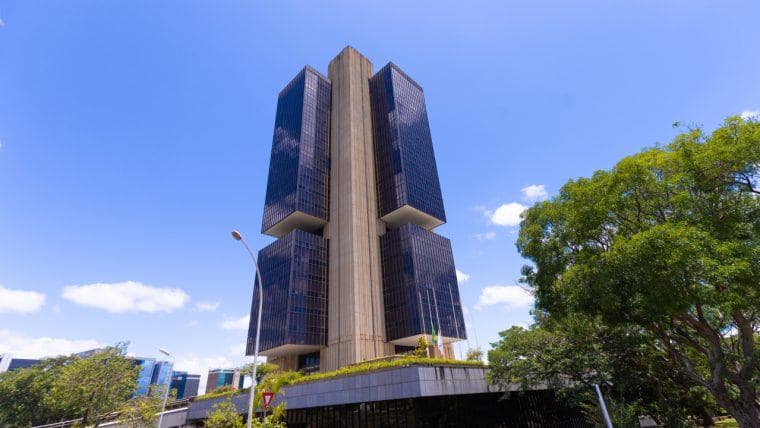
The Central Bank of Brazil is advancing the implementation of a crypto threat system for banks and national crypto exchanges.…
Read Now: Brazil Deploys Crypto Alerts System to Neutralize Cyber Threats