Cronos blockchain’s proposal to reissue 70 billion previously burned CRO tokens (worth $6.3 billion) into a locked reserve has drawn criticism, with some stakeholders urging a veto.
Cronos Proposal to Reissue 70B CRO Tokens Sparks Veto Calls

This article was published more than a year ago. Some information may no longer be current.
WRITTEN BY

SHARE

Cronos Proposes 70B CRO Token Reallocation Proposal
The Cronos blockchain, developed by the crypto exchange Crypto.com, is considering a governance proposal to reintroduce 70 billion CRO tokens—equivalent to $6.3 billion—into a “strategic reserve wallet” under a five-year vesting schedule.
The tokens, initially burned to reduce supply, would fund U.S.-focused initiatives, including a potential CRO exchange-traded fund (ETF), artificial intelligence (AI) development, and ecosystem grants.
Under the plan, the tokens would be linearly released over 60 months, with approximately 1.167 billion CRO vesting monthly. The funds would remain non-delegated while held in the reserve. The move aims to align with Cronos’ 2025 roadmap goals, which prioritize institutional adoption and AI integration.
Proponents argue the allocation supports Crypto.com’s push for a U.S.-listed CRO ETF and fosters TradFi partnerships. The proposal also includes reducing the network’s maximum inflation rate from 3.7% to 1% to maintain an 8% staking yield despite the increased token supply.
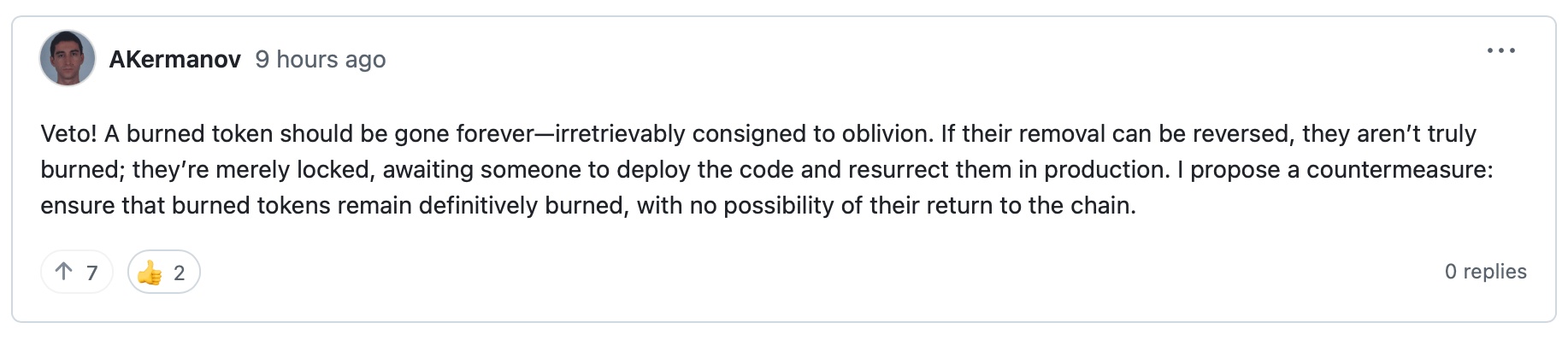
Critics, however, warn the reissuance could dilute token value and centralize control, undermining Cronos’ decentralized ethos. Some community members have called for a veto, citing insufficient transparency around the reserve’s management and long-term market impacts.
“Veto this. This will destroy the already tanked price of CRO,” one person wrote.
The proposal is tied to the Cronos POS V5 upgrade, requiring validators to adopt new chain software. A governance vote will determine its fate, with options to approve, reject, veto, or abstain. A veto would signal outright opposition to the upgrade’s objectives.
The proposal further emphasized the changes aim to “accelerate ecosystem growth” through strategic partnerships. The outcome, expected after on-chain voting concludes, could shape Cronos’ trajectory amid rising competition in blockchain interoperability and institutional crypto products.