Trump’s sweeping tariffs ignite global fears of dollar decline as China and BRICS eye rapid de-dollarization shift.
Chinese Expert Links Trump's Tariffs to Rapid De-dollarization and US Dollar Decline
WRITTEN BY

SHARE
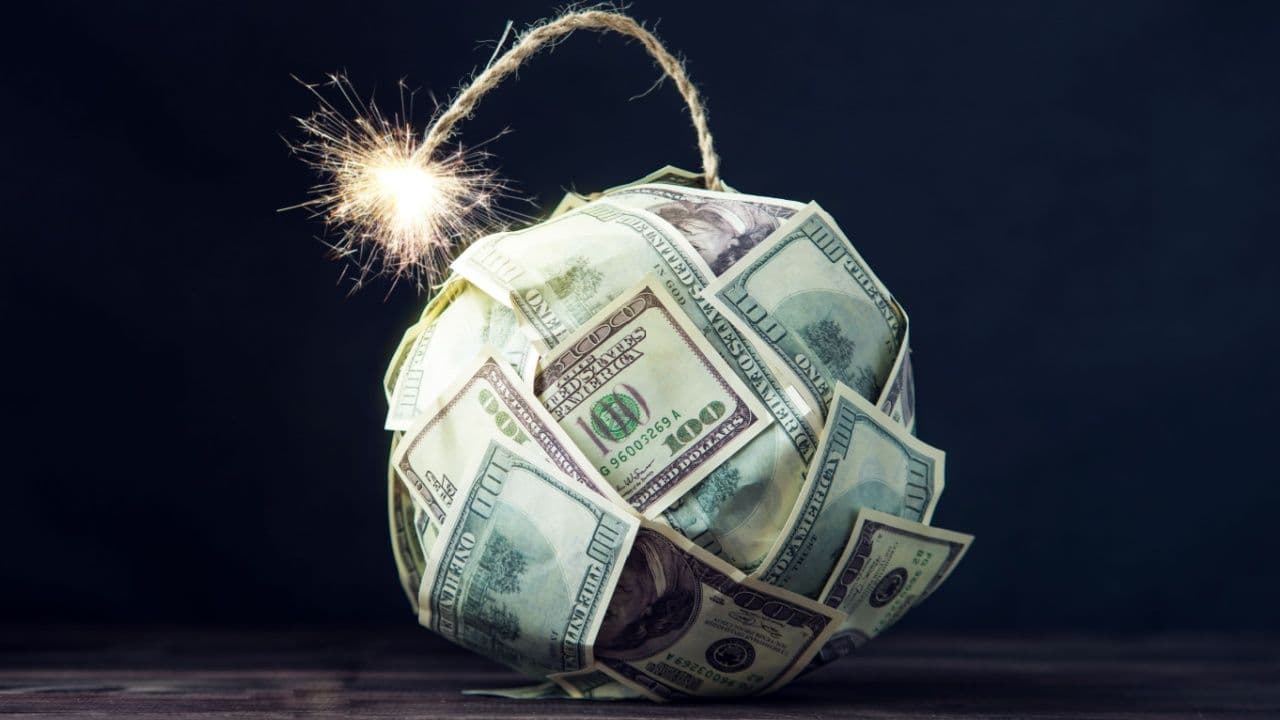
Trump’s Trade War Accelerates De-dollarization, Says Chinese Finance Expert
Tariff policies introduced by U.S. President Donald Trump this month have drawn sharp criticism from Chinese academic Zheng Runyu, who suggested that the measures could have serious consequences for the U.S. dollar’s standing as a global reserve currency. Speaking to Russian state news agency Tass from Shanghai, where he works at the Center for Russian Studies at East China Normal University, Zheng connected the trade decisions directly to what he views as Washington’s attempt to uphold financial dominance.
“The trade war unleashed by the U.S. is inseparably linked to maintaining their financial hegemony. However, their approach to using the U.S. dollar as a global reserve currency for a long time has made the Triffin paradox … even more obvious and has worsened the situation,” Zheng explained, linking the U.S. trade policy to a longstanding dilemma in global finance. “There is no reasonable option for resolving the internal contradiction between the hegemony of the U.S. dollar and liquidity under normal economic and trade relations. Now the U.S. wants both.” He added:
The harsh practice of raising tariffs, if it continues and intensifies, will ultimately only weaken the dollar.
These remarks reflect a concern that aggressive economic policies could undercut the very tools Washington relies on to maintain influence.
The White House released a fact sheet on April 15, outlining President Trump’s implementation of a 10% tariff on all countries, along with targeted reciprocal tariffs for nations with the largest trade deficits with the United States. The policy was launched on Liberation Day. In response, more than 75 countries began trade negotiations, prompting a pause in the additional individualized tariffs for those participating in talks. China, which chose to retaliate rather than negotiate, remains fully subject to the penalties. Chinese imports now face tariffs totaling up to 245%, including a 125% reciprocal tariff, a 20% tariff tied to the fentanyl crisis, and Section 301 tariffs ranging from 7.5% to 100% on specific goods.
The political and financial repercussions, according to Zheng, could pave the way for closer cooperation among nations seeking to move away from dollar dependence. He stated:
Under the current circumstances, cooperation on de-dollarization in the financial sector between China and Russia, as well as within the BRICS, has become more realistic.
“If in the past China, Russia, or the BRICS countries only considered replacing the U.S. dollar hypothetically, then in the context of the tariff war from the US, China, Russia, and the BRICS countries need to truly promote an effective de-dollarization process through practical cooperation,” he stressed.