The U.S. Securities and Exchange Commission (SEC) is reading a plan to keep Bitcoin, Ethereum, and other crypto safe if super-fast quantum computers show up one day.
Can the SEC Protect Bitcoin? Quantum Defense Plan Sparks Criticism
WRITTEN BY

SHARE

SEC Urged to Prepare for Cryptography Meltdown
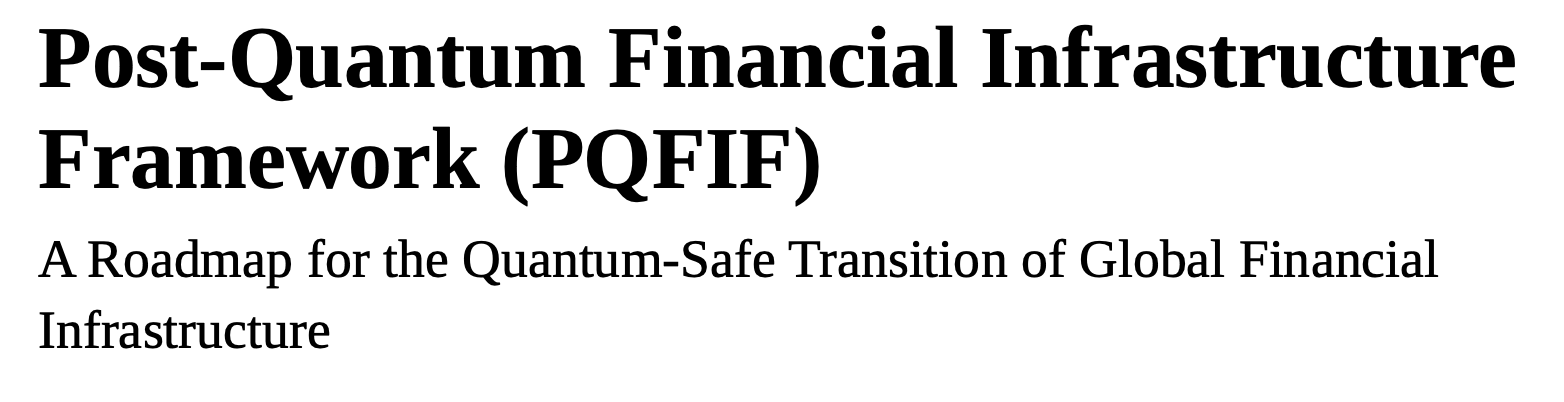
The 74-page Post-Quantum Financial Infrastructure Framework (PQFIF) plan was sent Sept. 3. It says today’s cryptography could break later when computers get super strong. Authored by Daniel Bruno Corvelo Costa, it lays out protections for Bitcoin, Ethereum, and other blockchain networks against a potential “Q-Day.”
The idea is to make new, stronger cryptography now, before that day comes. The author cites estimates that Q-Day could arrive as early as 2028, with a 17% to 34% chance of breaking RSA-2048 by 2034. The plan uses very simple steps: start small, test, grow, then polish.
Many worry that quantum computers could break Bitcoin. Recently, one developer, whose Bitcoin Improvement Proposal (BIP) 360 seeks quantum resistance for Bitcoin, cautioned that the growing threat could impair the network’s operability.
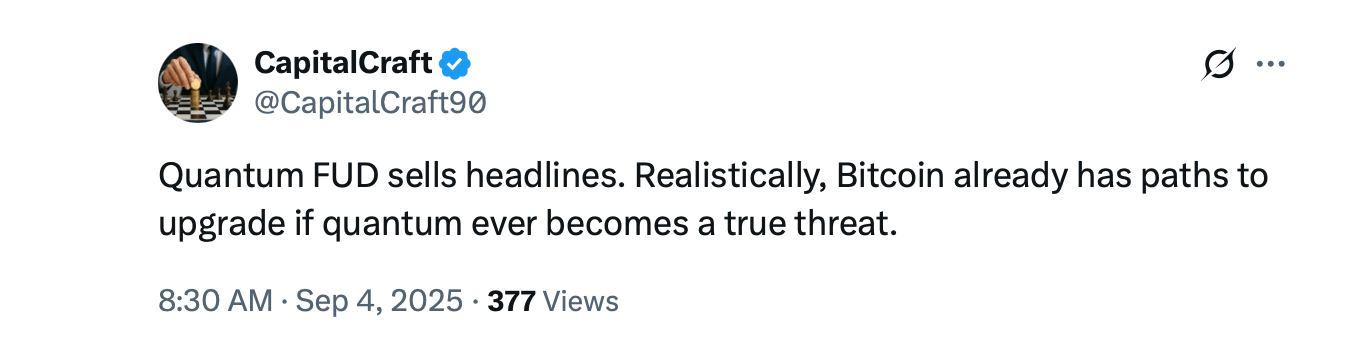
The PQFIF proposal states that a fix can work with the old way of doing things, so wallets and exchanges can keep going normally while the safety precautions are added. The plan urges the SEC to coordinate industry efforts. It also stresses that older wallet formats could be easier to attack later if nothing changes. So the author wants network participants to move to quantum resistance over time, but as soon as possible.
The author’s plan points to U.S. rules that ask for safer quantum-resistant measures by 2035. It says the crypto world and the government can talk and plan together so everyone is ready. Some people obviously do not like this. Critics say Bitcoin is made to run by a decentralized network of people and miners, not by a government boss. They worry rules like this could slowly tell open network participants what to do.
‘What the Hell Does the SEC Have to Do It?’ Critics Slam SEC Proposal
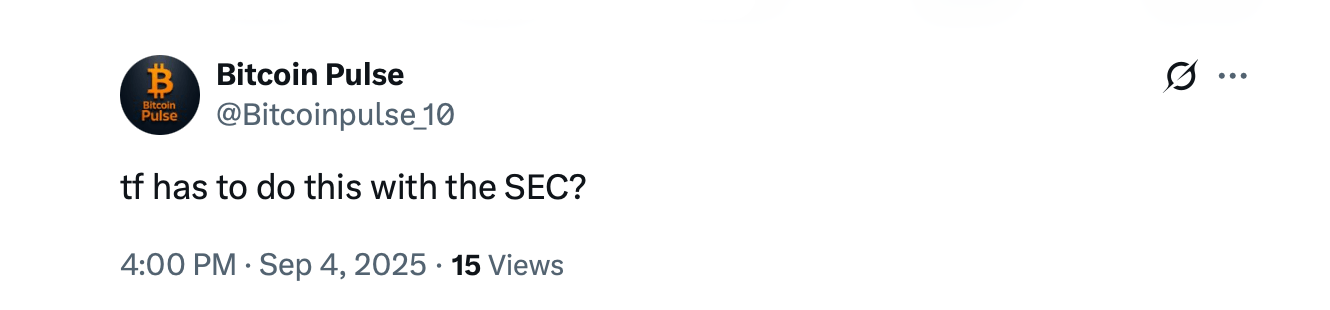
“What the hell does the SEC have to do with that?” one person on X asked. “Yea like the SEC really would know how to do that,” another quipped. “lmao, they absolutely will not understand that,” added another X user. Despite the distaste for government involvement, some believe cautious steps won’t surrender decentralization.

Ultimately, users decide with wallets and nodes, miners with software and hashpower, and exchanges with network integrations. Slow, public practice beats over rushed, private fixes. If threats arrive early, rehearsals will shorten downtime and confusion. Users will need clear prompts, staged migrations, and opt-in fallbacks ready if people are taking this seriously.
The debate is less about machines or math than about who gets to steer the ship when storms loom. Some will argue the network’s resilience is found not in bureaucratic oversight but in thousands of scattered nodes worldwide choosing together. Still, even without the SEC, the more practice they have facing threats, the less rattled they will be when uncertainty strikes.
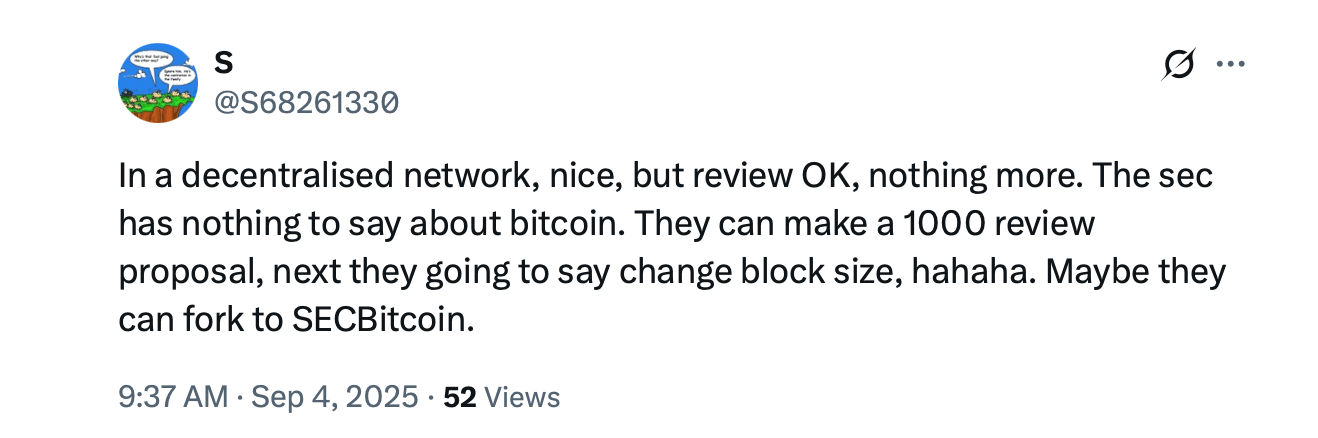
Even if quantum risk proves distant, the rehearsal may shape tomorrow’s crypto ethos. A community tested by hypothetical danger could sharpen its self-reliance, showing that readiness is not weakness but foresight. The reality is that it has nothing to do with the U.S. securities regulator and its commodities cohort; Bitcoin’s future rests in the hands of those who already keep the lights on block by block.