Bybit suffered a $1.48 billion hack on Feb. 21, 2025, leading to panic-driven withdrawals and a market-wide sell-off, according to the latest Glassnode onchain report co-authored by researchers Cryptovizart and Ukuria OC.
Bybit’s $1.48B Hack Triggers $4.3B Crypto Market Exodus, Glassnode Reports

This article was published more than a year ago. Some information may no longer be current.
WRITTEN BY

SHARE

Glassnode Tracks Bitcoin’s 13.6% Monthly Decline Following Bybit Exploit
The breach, researchers noted in the post-mortem report, pushed bitcoin ( BTC) 20% below its all-time high and intensified losses for short-term investors, the blockchain analytics firm stated. Glassnode’s analysis revealed that attackers drained 403,996 ETH from Bybit’s cold wallets using a “Musked UI” deception, as described by CEO Ben Zhou.
The breach triggered $4.3 billion in total exchange outflows across bitcoin, ethereum, and stablecoins, with Bybit’s reserves dropping by billions within days. Researchers noted the incident marked one of “the largest exchange hacks in crypto history.” Glassnode reported that the market reaction was severe. bitcoin’s monthly performance fell 13.6%, while ethereum and solana dropped 22.9% and 40%, respectively.
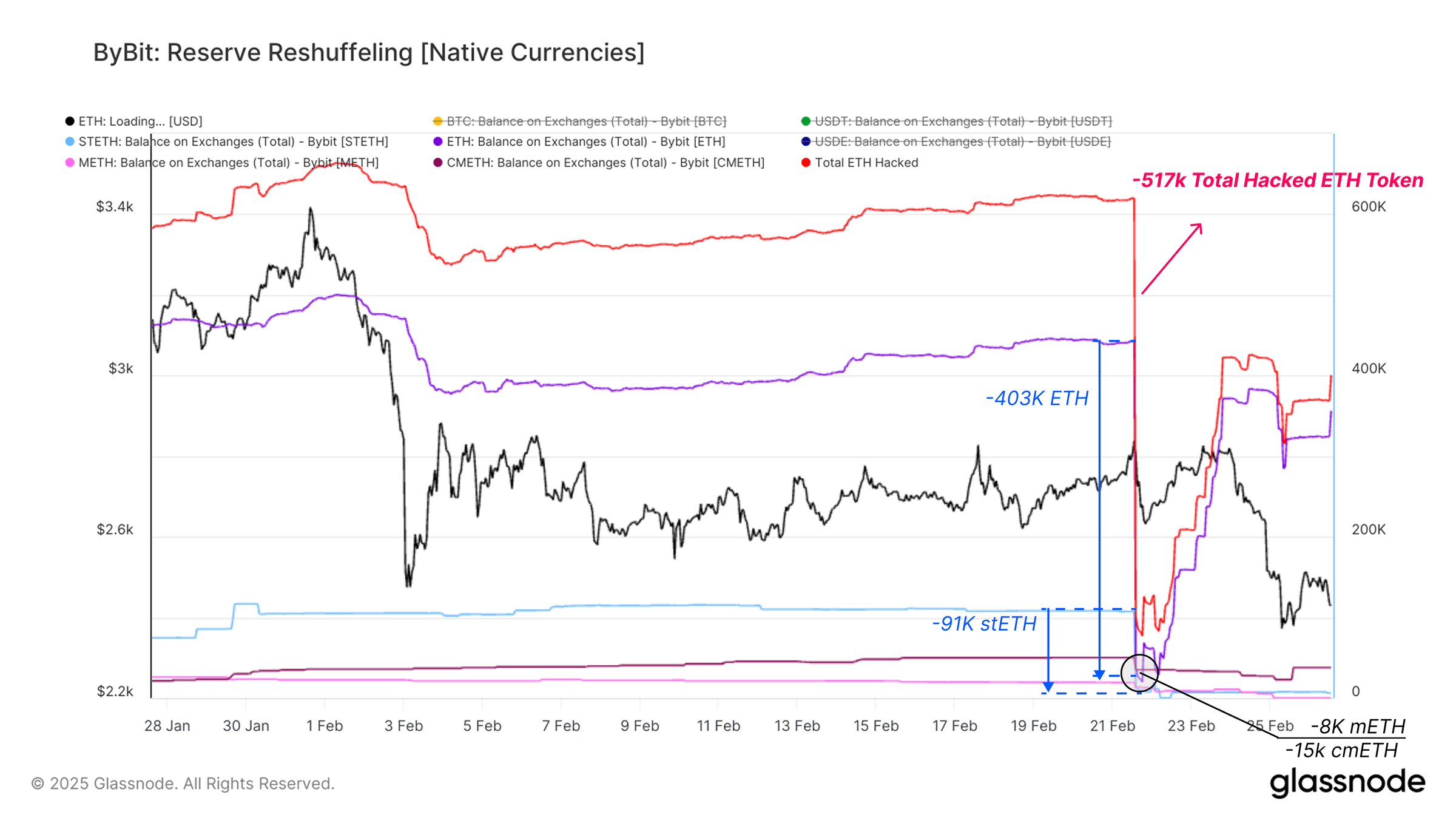
The Meme Coin Index (MCI) collapsed 36.9%, erasing gains dating back to April 2024. Glassnode researchers Cryptovizart and Ukuria OC highlighted that the sell-off pushed bitcoin into a “realized supply air gap” between $70,000 and $88,000—a low- liquidity zone amplifying volatility. Bybit’s reserves subsequently saw steep declines, with 21,248 BTC ($2.47 billion) and $1.76 billion in USDT exiting the platform, per Glassnode figures.
Ethereum reserves partially recovered to $1.19 billion after strategic inflows, but subsequent outflows indicated lingering investor unease. The exchange’s ETH price fell to $2,490, down 22.9% monthly. Short-term holders faced acute pressure, Glassnode’s onchain report further emphasized. The STH-MVRV ratio—measuring investor profitability—fell 15.8% below its quarterly median, signaling widespread unrealized losses. The STH-SOPR metric, tracking profit/loss ratios, dropped to -0.04, reflecting accelerated loss realization.
Historically, such conditions precede “seller exhaustion,” but demand stagnation risks prolonging the downturn, researchers warned. Glassnode’s report cautioned that bitcoin’s drops to foundational levels—5% below short-term holders’ cost basis—could trigger further sell-offs without demand recovery. The analytical firm’s data showed the market’s momentum now mirrors April 2024 levels, with macroeconomic uncertainties compounding risks.