Russia’s push for a BRICS payment system is gaining traction, with partners endorsing the plan to counter an “outdated, expensive, and ineffective” global framework.
BRICS Backs Russia's Push for New Global Payment System to Counter Western Control

This article was published more than a year ago. Some information may no longer be current.
WRITTEN BY

SHARE
BRICS Partners Support Russia’s Plan for a New Payment System
Russian Deputy Finance Minister Ivan Chebeskov announced that BRICS partners have shown strong support for Russia’s proposal to develop a BRICS payment system.
Speaking from Washington during the International Monetary Fund (IMF) and World Bank meetings, Chebeskov described the global payment framework as “outdated, expensive, and ineffective.” He elaborated: “What are we proposing within the BRICS framework? We propose … to think about improving the current settlement mechanisms. And within the BRICS framework, we have made such proposals. Basically, we have received a positive response from our partners.”
According to Chebeskov, dissatisfaction with the current system has grown. He detailed:
Everyone in the world, not only the BRICS countries, but also the G20, the IMF, everyone says that the current payment system is outdated. It is slow, expensive and ineffective.
Acknowledging that a transition to a new financial framework will require time, Chebeskov explained: “Shifts in the financial infrastructure do not happen in one year. It still takes time, testing, piloting. But given the ongoing geoeconomic fragmentation, it is again a matter of time before such alternatives are created and used.” He compared this shift to technological revolutions of the past, stating: “A new technology, a new standard appeared … from the point of view of the technological transition, because the solutions that we offer are more technologically advanced. And from the point of view of what people are already accustomed to.”
Chebeskov also discussed Western resistance to alternative financial systems, noting:
Western countries will try to maintain their competitive positions of control over financial infrastructure, financial institutions.
He called this “incorrect logic” for the long term, emphasizing the need for collective action. “It is impossible to stop and limit this growth. If this growth is not possible within the financial infrastructure of Western countries that they created, then we will create our own infrastructure. This is absolutely obvious,” he explained, adding that this control provides political leverage, “which is used as a political weapon.”
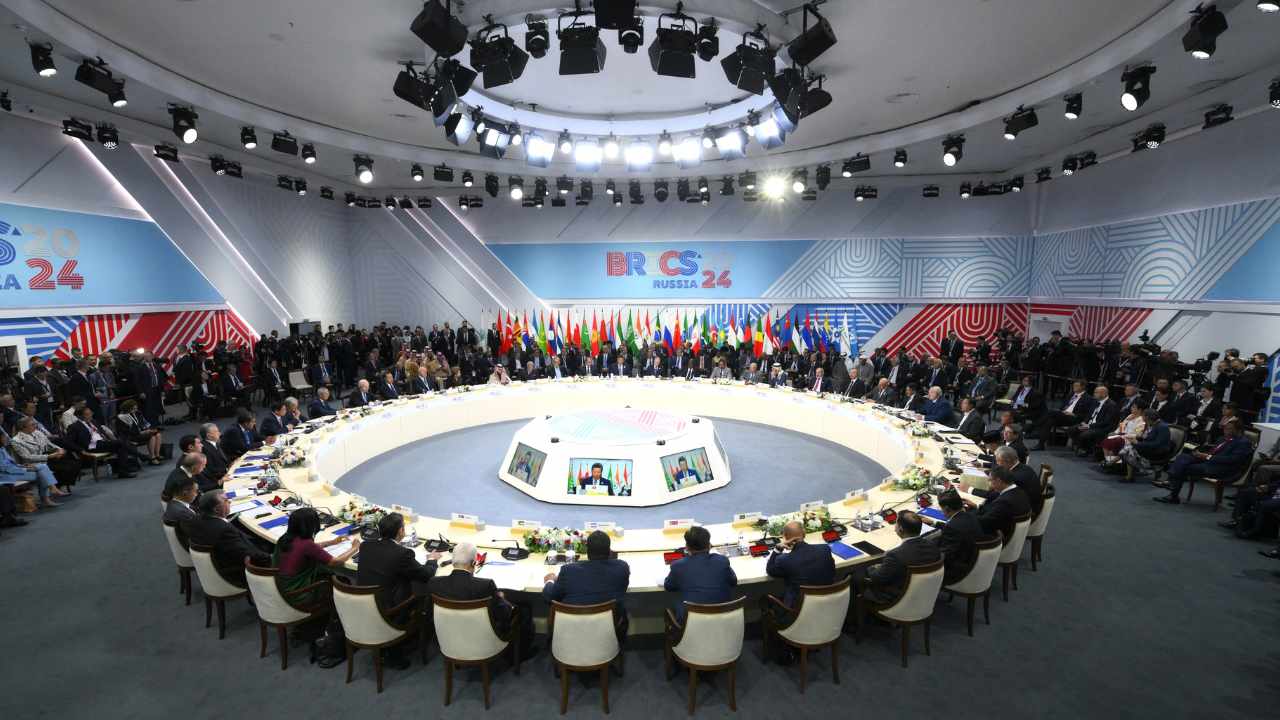
Referring to the recent BRICS summit in Kazan, Chebeskov highlighted the inclusion of issues on payment and financial infrastructure in the summit’s final declaration. “In general, within the framework of our [Russia’s] presidency, we touched upon the global issue of transforming and improving the international monetary and financial system. And we hit the nail right on the head … This is a very pressing issue,” he stated. He also emphasized: “We are not proposing any revolutions here, we are not proposing not to use anything. We always say that we are offering complementary alternative solutions. There is a positive reaction to them, which is reflected in the declaration adopted in Kazan.”