


Strategy’s bitcoin holdings underpin a business that raises capital and pays investors dollar dividends. Michael Saylor outlined how the company manages cash, financing costs, and different shareholder rights to sustain that income while pursuing bitcoin accumulation.
Bitcoin Pays No Coupon: Saylor Details Where Strategy Gets the Dollars
WRITTEN BY

SHARE

Key Takeaways
- MSTR offers greater bitcoin exposure; STRC targets dollar income.
- Cash reserves cover obligations, while buybacks can reduce them.
- A daily dividend proposal awaits an Oct. 28 shareholder vote.
Strategy Uses Bitcoin for Capital and Dollars for Income
Investors seeking income from Strategy’s bitcoin-focused business depend on the company’s ability to raise money and maintain dollar reserves. Michael Saylor, executive chairman of Strategy Inc. (Nasdaq: MSTR), explained that process in his bitcoin income model published Sept. 29. He wrote:
“Bitcoin itself pays no coupon. Strategy pays dividends under the terms of its securities.”
That distinction separates direct ownership of bitcoin from an investment in Strategy’s income-producing shares. In Saylor’s account, the cryptocurrency is the company’s capital, and financing and cash reserves turn it into shares that pay dollar income. Funding can come from selling new shares or selectively selling holdings. Its preferred securities are not collateralized by bitcoin, so holders have no direct claim on pledged coins.
Strategy distinguishes dollars reserved for dividends and debt interest from cash available for investment and capital allocation. Keeping those pools separate prevents money committed to payouts from also being counted as available for purchases or buybacks. A larger reserve gives the business more time to meet obligations without immediately raising funds or selling assets.
MSTR and STRC Give Investors Different Roles
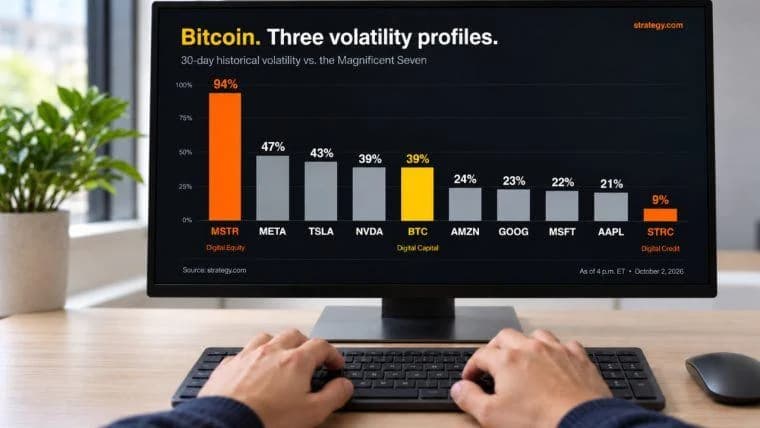
The financing structure offers two distinct investments: MSTR common shares provide ownership in the business, while STRC investors seek dollar income and reduced price volatility. Known as Stretch, STRC is preferred stock, ranking ahead of common shares for dividends and proceeds in liquidation. MSTR holders accept potentially larger gains and losses from bitcoin exposure, which Saylor argues helps support steadier income for STRC investors.
Stretch currently carries a 12% annualized rate, with cash paid twice monthly. Strategy documented those twice-monthly STRC distributions in a Sept. 1 filing with the Securities and Exchange Commission (SEC). The rate adjusts monthly to encourage trading near its $100 stated value. Adjustments can reduce sensitivity to interest-rate changes, but the instrument has no maturity date or guaranteed principal repayment.
Common shareholders also own the business developing what Saylor calls digital credit: corporate securities offering income supported by the company’s assets and financing. Under his framework connecting bitcoin capital with income-producing financial products, digital credit can underpin funds and investments represented on a blockchain. Expansion must create value per common share after financing costs, payouts, cash requirements, and dilution, which reduces existing owners’ proportional stake.
Buybacks and Faster Payouts Support the STRC Plan
Managing STRC means balancing new funding against the obligations it creates. Issuing shares above their $100 stated value can raise money, while repurchasing them below it can eliminate future dividends at a discount. Buybacks are discretionary and establish no guaranteed price floor. Raising the annual rate may attract demand but also increases the cash required.
The company on Sept. 25 proposed dividends accruing every calendar day, including weekends and holidays, with declared amounts generally paid the next business day. The proposal would change payment frequency without changing regular dividend rates or total regular obligations. Saylor views shorter waits for cash as a way to improve reinvestment timing. The change would create no daily redemption rights.
Shareholders are scheduled to vote Oct. 28 on the daily dividend amendments. If approved and adopted, STRC’s first daily record date for determining payout eligibility would be Nov. 1, followed by payment Nov. 2. Strife (STRF), Strike (STRK), and Stride (STRD) would begin daily record dates Jan. 1, 2027, with the first payments scheduled for Jan. 4.

Bitcoin finance is competing for allocations within global equity and debt markets totaling $318.5 trillion, according to Michael Saylor. He…
Read Now: Saylor Says Strategy, Strive Can Win Share of $318.5T With Bitcoin