


Bitcoin’s price reclaimed $80,000 per unit on Thursday after breaking past a key $79,000 resistance level, driving its market capitalization back to $1.61 trillion and positioning the asset for an over 20% gain in August.
Bessent's Bond Buyback Gamble Could Pour Fuel on Bitcoin's Price
WRITTEN BY

SHARE

Key Takeaways
- Bitcoin reclaimed $80,000 on Aug. 28 after breaking key $79,000 resistance.
- Volatility wiped out $416 million in crypto liquidations as short positions took an $80 million hit.
- Ray Dalio notes Scott Bessent’s debt policy could drive capital into alternative safe havens like bitcoin.
Key Resistance Broken
Bitcoin reclaimed $80,000 on Thursday, breaking through a key $79,000 resistance level that had held since shortly after Tuesday’s monthly high. The price rebound came amid reports that the U.S. Department of the Treasury is set to auction $92 billion in three-month bills on Aug. 31.
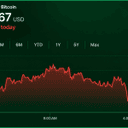
According to 24-hour chart data, bitcoin rose gradually from under $77,900 to just above $79,000 on Wednesday night before hitting an intraday peak of $80,808. Selling pressure briefly dragged the bitcoin price back below the threshold, where it remained until buyers pushed it upward starting around 4 a.m. EST.
In the initial wave, bitcoin briefly tapped $80,500 before breaching that level to reach its daily high during a second leg up. As of 12:12 p.m. EST, the cryptocurrency was trading above $80,400, reflecting a 24-hour gain of roughly 3%. Reclaiming $80,000 lifted bitcoin’s market capitalization back to $1.61 trillion.
With three days remaining in August, bitcoin appears poised to close the month up more than 20%, a sharp reversal from July’s nearly flat price action.
The volatility wiped out $105 million in leveraged bitcoin positions over 24 hours. Short positions accounted for the majority of the losses at roughly $80 million. The trend extended across the broader digital asset market, where short liquidations made up nearly 70% ($286 million) of the total $416 million wiped out.
Treasury Auction Impact
While unconfirmed, a Treasury auction of this size typically drains short-term market liquidity. Market analysts noted that the net economic impact will depend on issuance volumes and bidder demand. Weak auction demand could elevate short-term yields, placing temporary pressure on equities and digital assets.
Separately, a report published by The Economist titled “America Will Regret Scott Bessent’s Bond-Market Misadventures” warned that recent policy steps by U.S. Treasury Secretary Scott Bessent risk severely undermining the credibility of the American financial system. The piece argued that by doubling bond buyback limits to artificially suppress long-term yields and tilting new debt issuance heavily toward short-term Treasury bills, the Treasury is merely shortening the duration of government liabilities. This leaves the U.S. highly vulnerable to future interest rate spikes and rollover risks.
In addition, shifting government debt heavily into short-dated bills risks crowding out private-sector financial instruments, while attempting to cap borrowing costs without addressing structural deficits distorts market pricing mechanisms.
The report also argued that abruptly abandoning the traditional principle of “regular and predictable” debt issuance in favor of discretionary yield management threatens long-term investor confidence in U.S. sovereign debt and the broader U.S. financial system.
While the U.S. Treasury has defended its actions, prominent figures such as Ray Dalio have argued that these moves effectively lower the inflation-adjusted return on traditional fixed income. As a consequence, capital searching for long-term store-of-value properties may rotate out of sovereign bonds and into alternative safe havens like gold and bitcoin, which have both trended higher since the Treasury’s announcement.
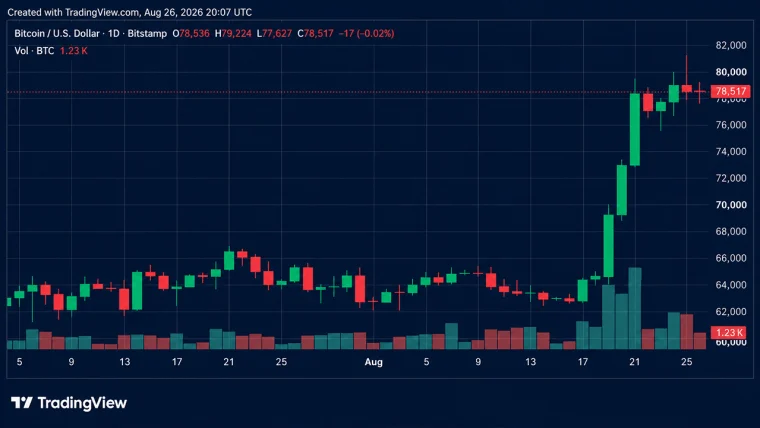
Bitcoin’s struggle to maintain momentum, which has seen its price climb by more than 20% since Aug. 17, continued Wednesday…
Read Now: Bitcoin Price Slams Into $79K Wall as Rally Momentum Starts Fading