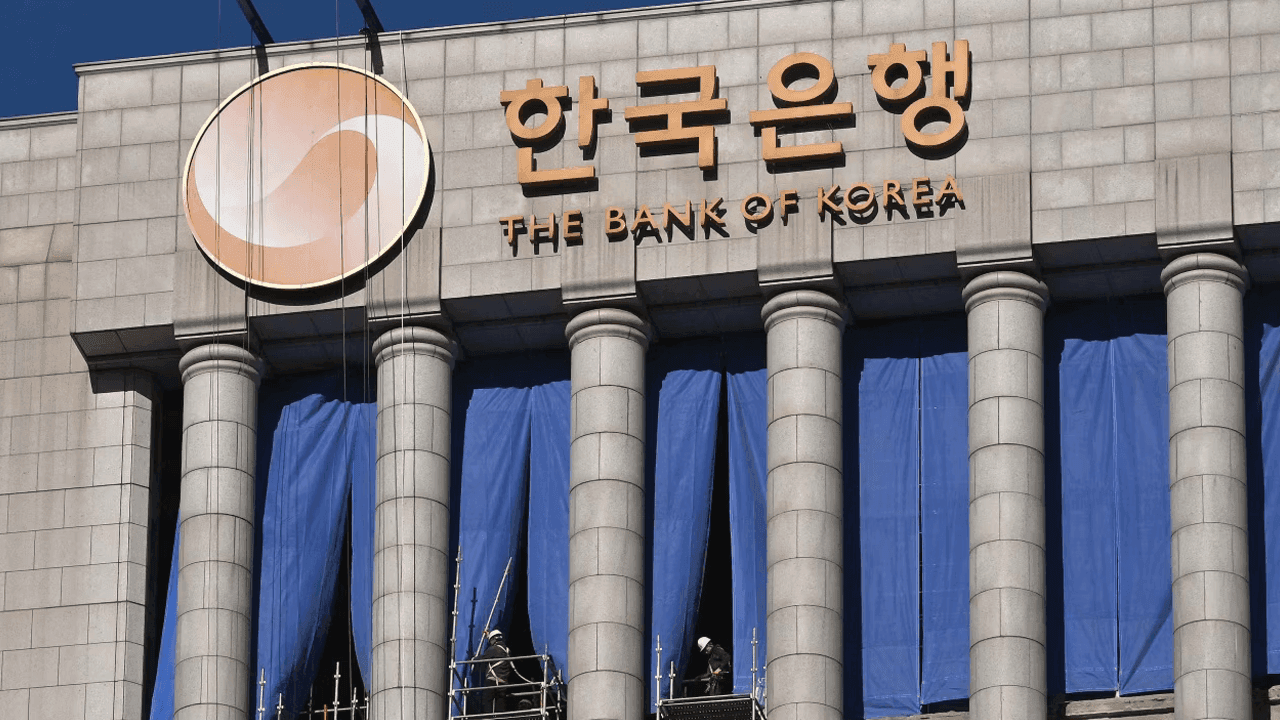
The Bank of Korea has stated it has not considered adding bitcoin ( BTC) to its foreign exchange reserves, emphasizing the need for extreme caution on this matter.
Bank of Korea Dismisses Bitcoin Reserves, Cites Volatility Concerns

This article was published more than a year ago. Some information may no longer be current.
WRITTEN BY

SHARE
Volatility: Crypto’s Achilles Heel
The South Korean central bank has stated that it has not explored adding bitcoin ( BTC) to the country’s foreign exchange reserves. Responding to an inquiry from Cha Gyu-geun, a lawmaker from the Democratic Party of Korea, the bank warned that any such discussion requires extreme caution.
According to a local report, the Bank of Korea’s remarks on BTC reserves mark the first time the central bank has addressed whether South Korea plans to follow the United States’ lead. As reported by Bitcoin.com News, the Trump administration’s BTC reserve plan involves transferring seized cryptocurrency to a strategic stockpile.
In rejecting calls for South Korea to create a BTC stockpile, the central bank cited the volatility of cryptocurrencies as a major factor undermining their suitability as reserve assets. The bank stated:
If the virtual asset market becomes unstable, there is concern that transaction costs may increase rapidly in the process of cashing out bitcoin.
The Bank of Korea also argued that cryptocurrencies like BTC do not meet the International Monetary Fund’s (IMF) standards for calculating foreign exchange reserves, contributing to its reluctance.
While the central bank acknowledged that countries such as Brazil and the Czech Republic have discussed the idea, it pointed out that key institutions like the European Central Bank (ECB) and the Swiss National Bank have expressed negative views.
Since U.S. President Donald Trump initiated the creation a strategic cryptocurrency reserve, it has sparked interest among other countries in exploring similar initiatives. It is also thought to have acted as a catalyst for nations to evaluate the role of cryptocurrencies in their economic strategies.
However, crypto critics have attacked the idea, emphasizing the risks and challenges that could arise from such a move. Many advocate for caution and thorough consideration before proceeding.