


Andrew Left, the prominent short seller behind Citron Research, was found guilty of securities fraud by a U.S. federal jury, which convicted him on 13 of 17 counts after a three-week trial in Los Angeles.
'The Jury Got It Wrong': Citron's Andrew Left Convicted of Securities Fraud
WRITTEN BY

SHARE

Key Takeaways
A Landmark Case Over Posts and Trades
A Los Angeles federal jury found Andrew Left, the 55-year-old founder of Citron Research, guilty of securities fraud, convicting him on 13 of 17 counts after a three-week trial. The verdict caps a closely watched case that examined how a well-known market commentator used social media to influence share prices.
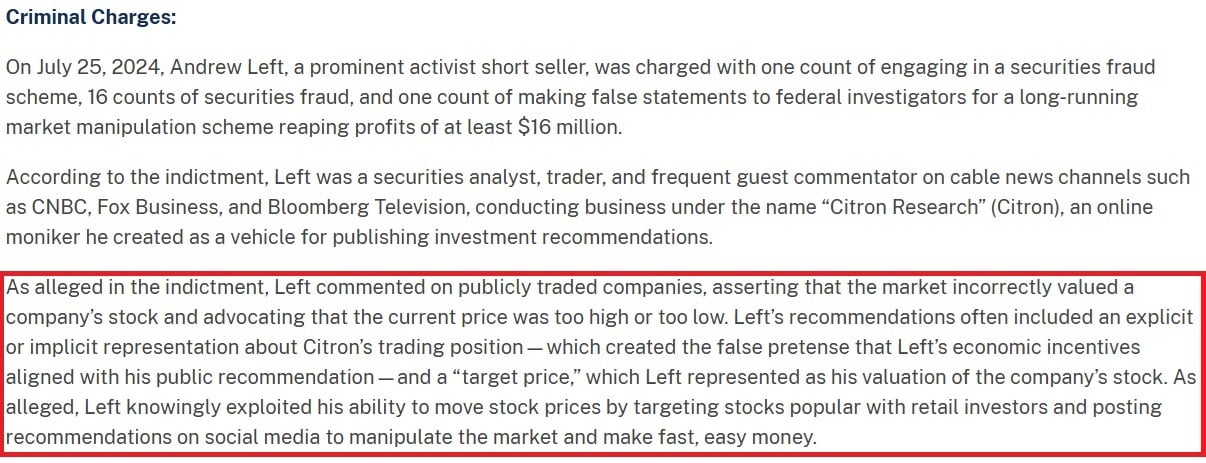
Left built Citron Research into one of the most recognizable short-selling brands of the past two decades, publishing reports and posts that frequently sent targeted stocks sharply lower. Prosecutors argued that he weaponized that influence, taking positions, posting market-moving commentary, and then quietly closing his trades against the very moves his posts created.
According to the government, Left made more than $20 million from such trades between 2018 and 2023. Prosecutors said he repeatedly told followers he was holding positions while he was actually exiting them, a pattern they characterized as a deliberate scheme to defraud the market.
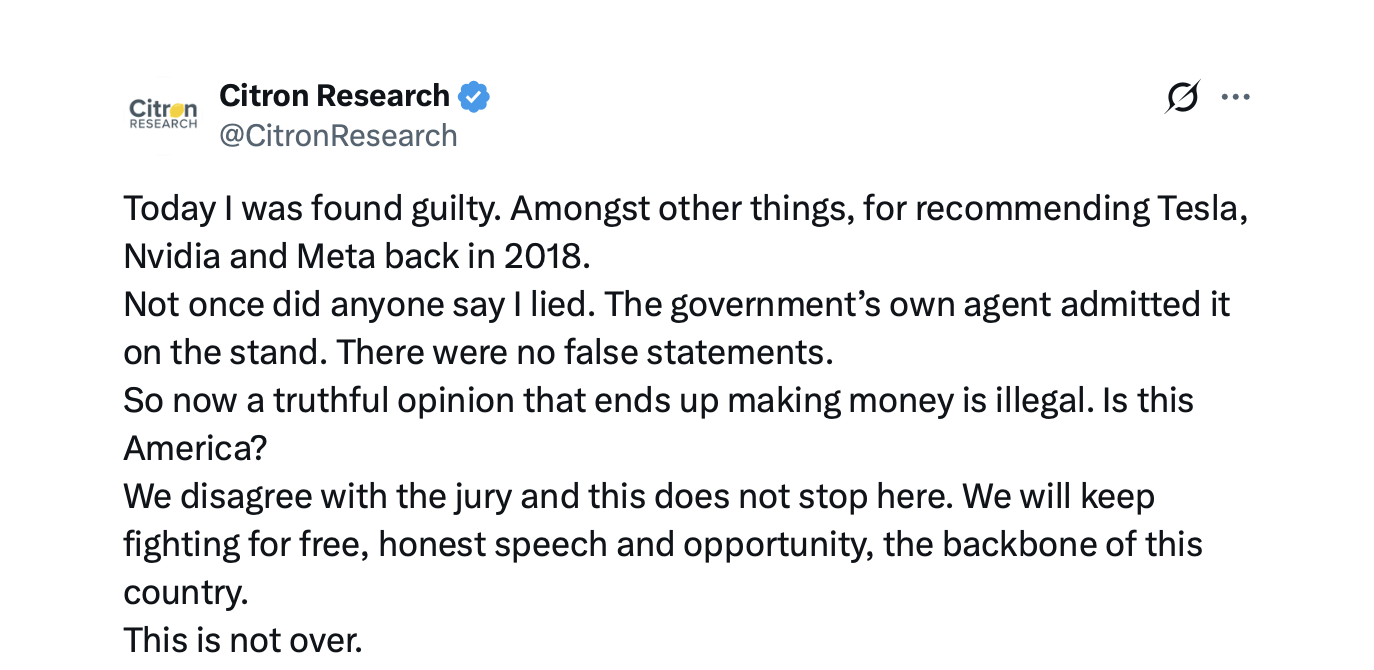
Left, who took the unusual step of testifying in his own defense, rejected that account and vowed to keep fighting. Speaking to reporters after the verdict, he said:
“I think the jury got it wrong and it’s not the end of the road.”
Up to 25 Years and an Appeal
The conviction exposes Left to a maximum of up to 25 years in federal prison, though sentences in white-collar cases are typically far shorter than the statutory ceiling. A sentencing date had not been set at the time of the verdict, and his comments signaled that an appeal is likely.
The case carries weight well beyond one trader as Left is among the most high-profile short sellers to face a criminal securities-fraud conviction over public commentary, and the outcome will be studied by analysts, activist investors, and influencers who move markets with posts.
The development also lands at a moment when regulators are increasingly focused on how online speech intersects with trading, a theme that has surfaced in crypto markets as well, where figures from Big Short investor Michael Burry to anonymous analysts routinely move prices with a single post.
For the short-selling industry, the verdict draws a sharper line between aggressive, legal advocacy of a bearish thesis and conduct that prosecutors can frame as manipulation. Short sellers have long argued that they expose fraud and overvaluation that benefits the broader market; the government’s case contended that Left crossed from analysis into deception for personal profit.
The Immediate Next Step Is Sentencing
In the near term, the court will weigh the gains prosecutors attributed to the scheme against mitigating factors, followed by the appeal Left has all but promised. The Securities and Exchange Commission (SEC) has separately pursued civil charges tied to the same conduct, a parallel track that can proceed regardless of the criminal outcome.
However, the appeal unfolds, the conviction is bound to set a precedent in terms of prosecutors taking a celebrity short seller to trial over what he posted (with a jury willing to convict), potentially reshaping how commentators on both Wall Street and crypto Twitter weigh their words before unleashing them online.