Recent data from Glassnode provides a detailed analysis of bitcoin’s long-term holders (LTH) and their impact on the cryptocurrency market. In the latest onchain report, researchers highlight key metrics and behaviors of LTHs to understand supply and demand dynamics.
Analysis of Long-Term 'Diamond Hand' Bitcoin Holders Reveals Market Insights: Glassnode

This article was published more than a year ago. Some information may no longer be current.
WRITTEN BY

SHARE

Bitcoin Market Trends and Long-Term Holders Analyzed in the Latest Glassnode Report
Glassnode’s analysis shows that bitcoin (BTC) has traded sideways since hitting an all-time high of $73,794 in March. By early May, demand momentum had turned negative, indicating a possible bearish trend. The cost-basis analysis of short-term holders (STH) revealed significant capital outflows during this period.
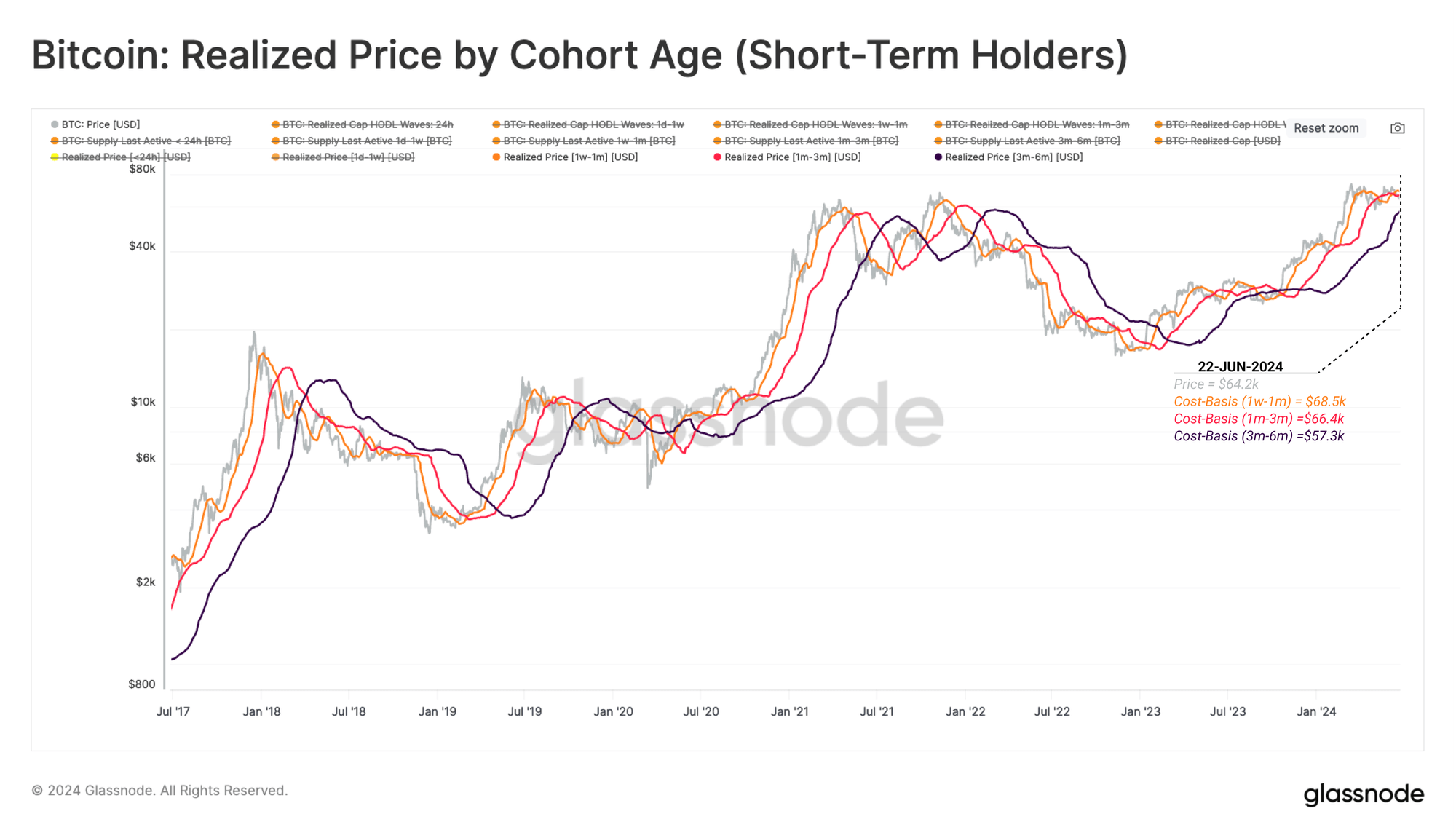
The report further emphasizes the role of long-term holders in the market. Despite constituting only 4% to 8% of daily onchain volume, LTHs are responsible for 30% to 40% of cumulative profits realized during bull markets. The researchers show that this underscores the concentration of wealth among older coins and the gradual return to long-term holders over time. Glassnode’s report states:
This finding underlines the concentration of wealth in older coins gradually paying back the diamond hands over the bull market.
In terms of demand tracking, the report outlines a methodology using the cost-basis of various age brackets within the STH cohort. This approach helps identify capital flows into and out of the market, providing insights into investor behavior during different market phases. Glassnode’s data suggests that the current market structure, characterized by spot prices falling below cost-basis levels, has historically led to investor confidence deterioration.
“Since mid-June, the spot price has plunged below the cost basis of both the 1w-1m holders ($68.5k) and 1m-3m holders ($66.4k),” Glassnode’s study details. “If this structure persists, it has historically resulted in a deterioration of investor confidence, and risks this correction being deeper and taking longer to recover from.”
Glassnode’s analysis also examines the behavior of LTHs during different market phases. The study highlights the increased frequency of high-spending days by LTHs during the euphoria phase of bull markets. “This highlights the relatively consistent behavior pattern of long-term investors taking profits during periods of rapid price appreciation,” the report concludes.
What do you think about Glassnode’s onchain report? Share your thoughts and opinions about this subject in the comments section below.