


First sketched in the 1990s by engineer Norman Nixon, the Freedom Ship is being pitched again by Freedom Cruise Line International as a self-contained floating city in international waters. The plan calls for housing 50,000 permanent residents and running largely independent of ports, with nuclear power and an estimated $15 billion build that proponents say could take 3 to 4 years once funded.
A $15 Billion Plan Would Put a Floating City of 50,000 in International Waters
WRITTEN BY
SHARE
Key Takeaways
- Freedom Cruise Line seeks $15.6B for a 50,000-resident city; financing remains the hurdle.
- Norman Nixon’s 1990s concept revives, testing maritime engineering and nuclear power plans.
- Freedom Ship targets a 3-4 year build if funded; regulatory approval remains the next test.
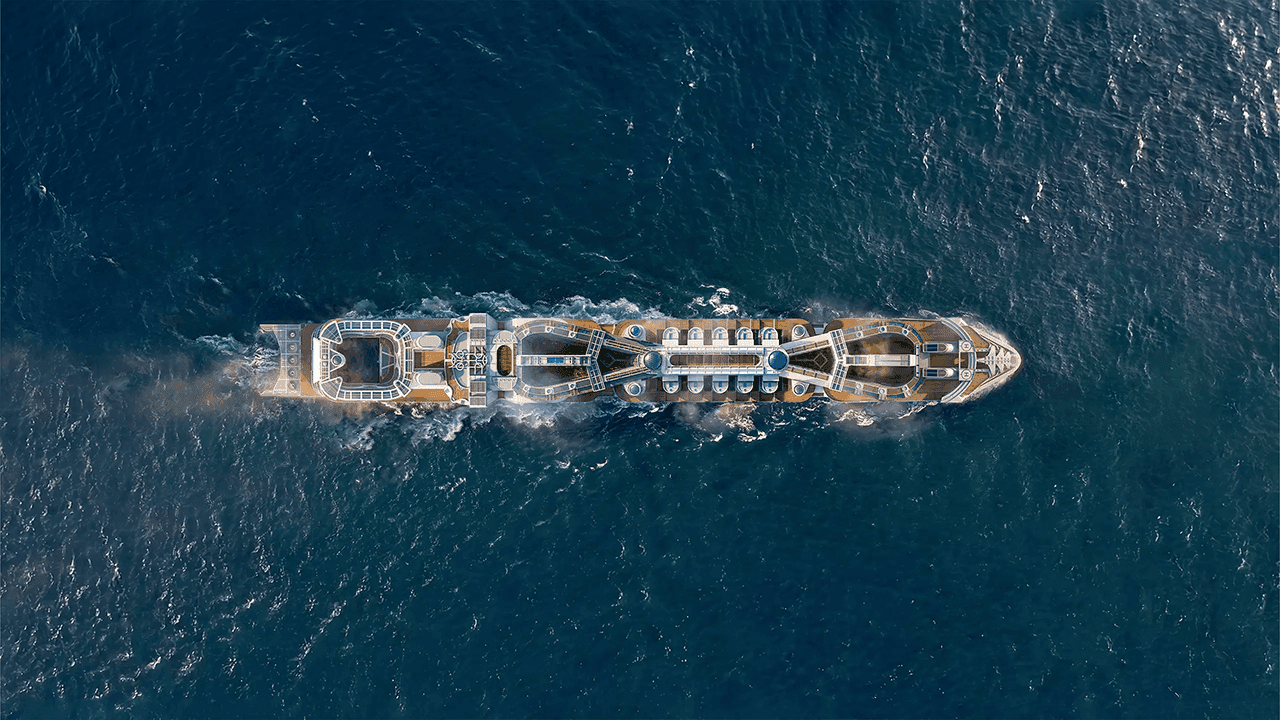
The Freedom Ship has been pitched for decades as a full-size city that never docks, with room for 50,000 permanent residents beyond any nation’s borders. First sketched in the 1990s by engineer Norman Nixon and now promoted by Freedom Cruise Line International, the project calls for roughly $15 billion to turn renderings into steel. The promise is familiar urban life at sea, complete with schools, hospitals, banking, and big-ticket diversions like a stadium and aquapark, potentially powered by nuclear energy. The problem is just as clear: no one has ever financed or built anything on this scale, and the engineering, regulation, and economics get harder the closer the idea moves to reality.
A floating city keeps resurfacing
Every few years, an old idea washes back onto the tech and business shoreline: build a city that never needs to dock. The proposal is called the Freedom Ship, and it has been circulating since the 1990s. It sits somewhere between mega-project real estate, maritime engineering, and a startup pitch deck that never quite closes.
The core vision is bluntly ambitious. The vessel would stretch about 1.6 kilometers (roughly 1 mile) long and aim to host around 50,000 permanent residents, with total capacity estimates reaching 80,000 people when you add visitors and staff. It would live in international waters, leaning on autonomy as a selling point, even as it inevitably intersects with the laws of flags, ports, insurers, and finance.
From cruise ship to always-on infrastructure
What makes the Freedom Ship concept different from a traditional cruise business is its promise of permanence. The plans describe neighborhoods, internal transportation like a tram system, long pedestrian walkways, and green space designed for daily life rather than vacation pacing.
On-paper amenities read like a compact metro area: schools through higher education, hospitals, banks, offices, and sprawling commercial space. The cultural pieces go big too, including a 15,000-seat stadium plus museums and concert venues. The ship would reportedly circle the globe about once every 2.5 years, connecting to land via ferries because a platform that large could not slip into normal ports.
The money problem is the whole problem
The project is commonly traced back to Norman Nixon, an American engineer, and is now associated with Freedom Cruise Line International. The sticking point has stayed stubbornly consistent: funding. Developers have floated an estimated build cost around $15.6 billion (a conversion of the frequently cited 12 billion British pounds figure), which immediately pushes the effort into the realm of sovereign-scale financing, not typical venture capital.
Construction ideas have included building the hull in sections overseas and assembling at sea, with a projected timeline of 3 to 4 years once fully financed. But financing is not just about raising cash. It is about proving unit economics for a city that moves, and underwriting risks from storms to medical care to supply chains.
Nuclear power, regulation, and trust
One proposal that grabs attention is powering the platform with nuclear energy, pitched as a way to provide steady electricity and reduce carbon emissions for a community this large. For a US reader, that idea instantly raises practical questions: How would a nuclear-powered civilian megastructure navigate port access, insurance markets, and overlapping jurisdiction from agencies like the Coast Guard and the Nuclear Regulatory Commission?
That is why the Freedom Ship remains compelling as a narrative, but stubborn as a business. It promises a complete, floating society. It also demands a level of technical execution, regulatory clearance, and financial confidence that few projects, on land or sea, ever manage to earn.