With 5,255 delegates attending, the 16th BRICS Summit in Kazan focused on building a “multipolar world order” and reducing reliance on dollar-based systems.
5,000 Delegates Gather as BRICS Charts a Path to Sidestep Western Influence

This article was published more than a year ago. Some information may no longer be current.
WRITTEN BY

SHARE
With Over 5,000 Delegates, BRICS Summit Sends a Message to the Dollar’s Dominance
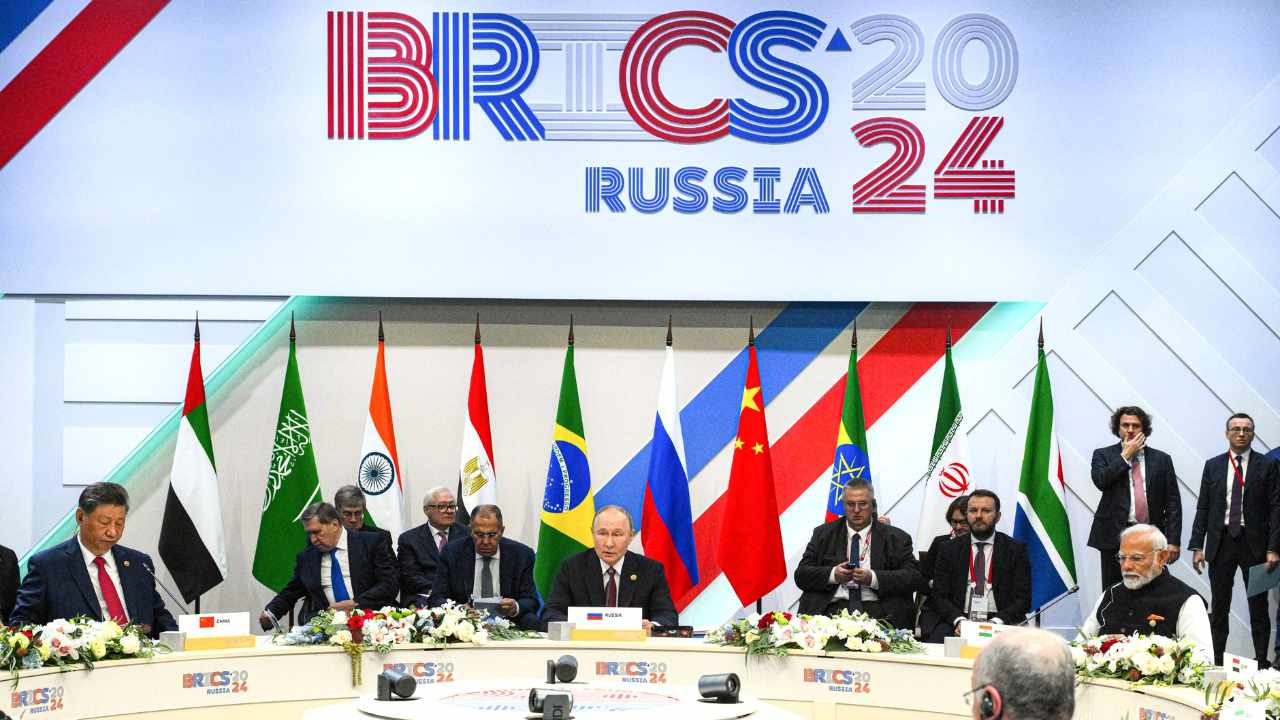
More than 5,000 delegates gathered in Kazan for the 16th BRICS Summit which took place from Oct. 22-24, marking the first meeting since BRICS expanded to include Egypt, Iran, Ethiopia, and the United Arab Emirates (UAE). Tatarstan Deputy Prime Minister Shamil Gafarov reported the significant turnout:
There were 42 delegations, 24 heads of state, six international organizations, 36 countries, [and] 5,255 members of official delegations.
With key figures like China’s Xi Jinping and India’s Narendra Modi attending, the summit aimed to deepen economic cooperation and explore alternatives to Western financial systems.
President Vladimir Putin called the summit “a great success” and highlighted the adoption of the Kazan Declaration, which emphasized a “more democratic, inclusive, and multipolar world order.” BRICS leaders discussed enhancing interbank communication and payment solutions to decrease reliance on dollar-based systems, though Putin clarified that the bloc is not pursuing a separate SWIFT replacement. The Kazan Declaration also addressed global challenges, including regional conflicts, while underscoring BRICS’ commitment to sovereign development.
Despite general consensus, debates over further expansion revealed some members’ concerns about admitting additional countries, highlighting the logistical and ideological complexities within the alliance. Nonetheless, BRICS’ expanded membership signals its intent to play a more substantial role on the global stage.
Russia’s Deputy Foreign Minister Sergey Ryabkov has stated that BRICS is not intended as an anti-Western bloc and remains open to cooperation. Speaking after the BRICS summit in Kazan, Ryabkov affirmed that the alliance is transparent about its goals and open to engagement. He noted that Putin reiterated this stance, emphasizing BRICS’ commitment to cooperation while defending its members’ interests.