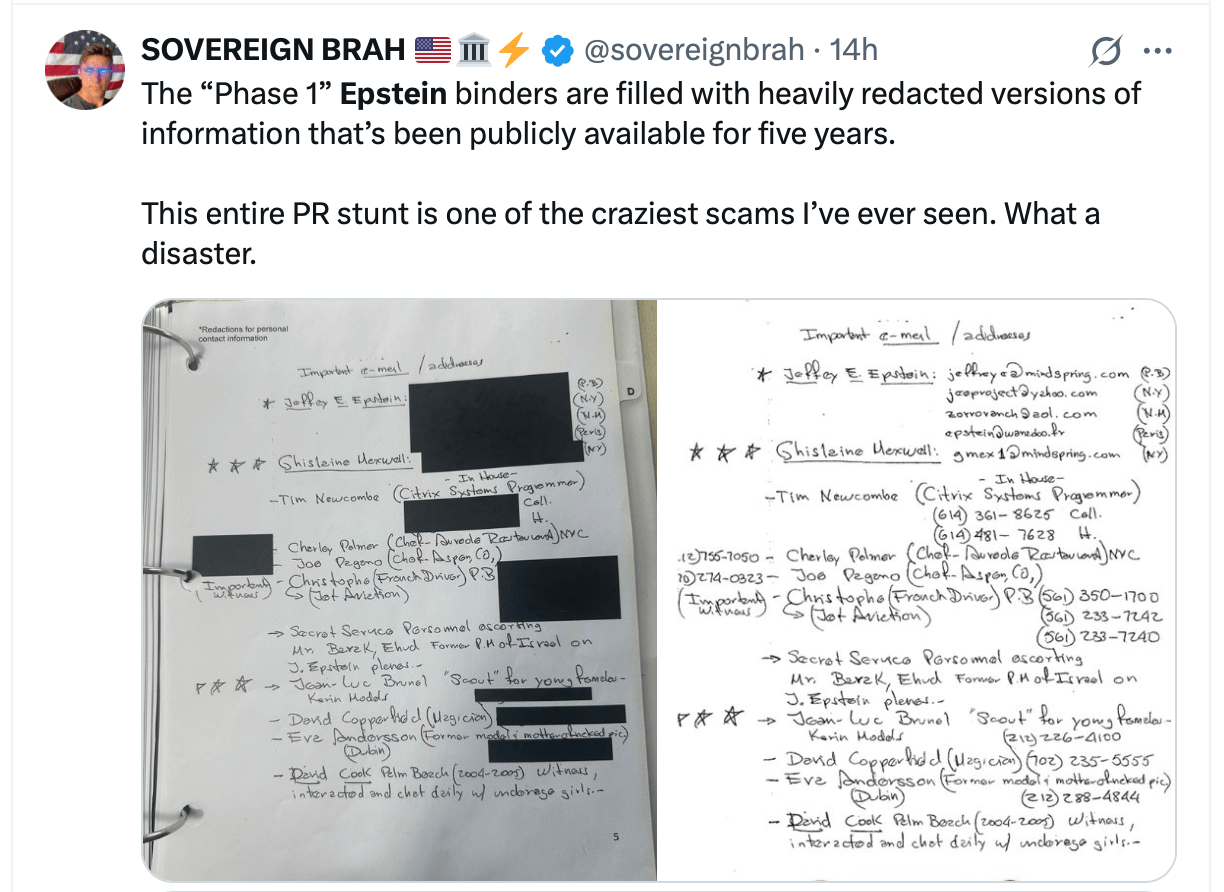
The U.S. Department of Justice’s long-awaited release of the first phase of Jeffrey Epstein-related documents on Feb. 27, 2025, has drawn sharp criticism for containing mostly redacted or previously public information, failing to meet expectations of exposing high-profile figures linked to his sex trafficking network. Amid $1.8 million Polymarket bets on elite names like Prince Andrew and Bill Clinton, the 2025 Epstein files release was dismissed as “bunk” for lacking new revelations.
2025 Epstein Files Contested as Polymarket Bettors Chase the Truth

This article was published more than a year ago. Some information may no longer be current.
WRITTEN BY

SHARE
Phase 1 Epstein Files Dubbed ‘Bunk’ as Polymarket Bettors Bet on Names
The so-called 200-page document dump, part of a transparency initiative under Attorney General Pamela Bondi, included Epstein’s redacted phone book, pilot logs from co-conspirator Ghislaine Maxwell’s trial, and a three-page “Evidence List” cataloging specific items. While officials emphasized the release aimed to protect victims’ identities through redactions, critics dismissed the files as “recycled crap” lacking new details, according to social media posts and news reports.
The Epstein case, involving allegations of sex trafficking and abuse of over 250 minors across his properties, has fueled years of speculation about powerful accomplices. The Phase 1 release was highly anticipated, particularly among right-wing groups who believed it would expose political adversaries under the Trump administration. News stations reported that some conservatives had framed the documents as a potential bombshell, with AG Bondi initially stating the files would include “a lot of names.”
Did you know Ghislaine Maxwell’s last Reddit post was about bitcoin (BTC)? Read all about here!
However, the files omitted revelations about prominent individuals. A New York Post source who reviewed the documents noted they contained a few new names, while others said the names were not new, and as social media influencers, criticized the DOJ for a “Nothing Burger.” Social media posts highlighted frustration among Trump supporters, who had pushed for the release to target political opponents. The Justice Department reiterated that redactions were necessary to shield victims, though this fueled accusations of withheld information.
The inclusion of the “Evidence List” marked the only new material, detailing items seized from Epstein’s properties, such as a “LSJ logbook” referencing his private island, Little St. James. The reported list offered glimpses into physical evidence but did little to address demands for accountability. Officials confirmed thousands of additional pages would follow this week, though the staggered rollout exacerbated skepticism.

Amid the fallout, Polymarket bettors wagered over $1.8 million on predictions of which figures would be named in Epstein’s files by June 30, 2025. David Koch led with 100% odds ($1.8M volume), followed by Prince Andrew (99%, $382K) and Michael Jackson (95%, $63K). Bill Clinton (89%), Bill Gates (52%), and Stephen Hawking (32%) also drew significant bets, reflecting public speculation absent from Phase 1.
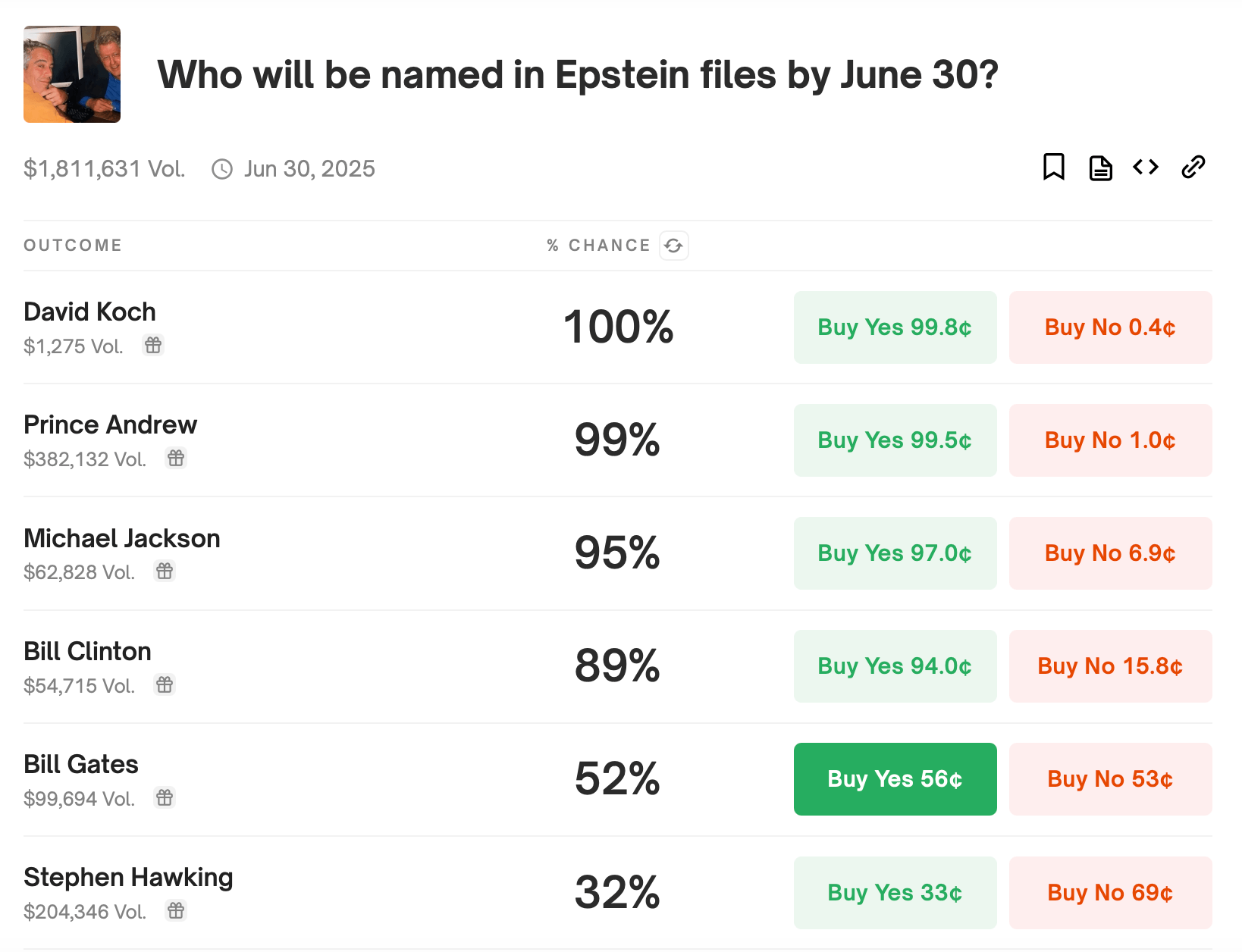
Lower-profile bets included Larry Page (43%, $577), Hillary Clinton (39%, $16K), and Tom Hanks (22%, $22K). Figures like Leonardo DiCaprio (34%), Al Gore (35%), and Oprah Winfrey (19%) saw modest activity. Despite high-stakes predictions, none were actually corroborated by the initial release, highlighting the gap between conjecture and the documents’ contents.
Reactions showcased a disconnect between public expectations and the documents’ scope. While the release formalized previously leaked records, it avoided implicating elites, leaving many disillusioned. As Phase 1 concluded, focus shifted to future disclosures, though the initial response highlighted enduring tensions between transparency pledges and conspiracy-driven anticipation.
The U.S. Justice Department has not specified timelines for subsequent phases, leaving unresolved whether later releases will address calls for accountability or further entrench perceptions of opacity. For now, the fallout reflects broader debates over justice, privacy, and the politicization of high-profile investigations. The Epstein files’ Phase 1 release—and the ensuing disillusionment—mirrors engineered for manipulation tactics. The government’s “transparent” Phase 1 rollout collides with the public fury over redactions, all to shepherd discourse toward a preordained narrative where opacity endures, accountability is deferred, and public attention is diverted.